About Me

My photo
PLEASE NOTE: I have moved my blog to http://howardcasner.wordpress.com/. Please follow the link for all my updated postings. Thank you.

Friday, December 11, 2009

FEEDBACK FEEDBACK: more thoughts on giving notes and feedback on screenplays Part II

The previous entry on this subject was devoted to the topic of some types of feedback I can do without. I wanted to concentrate more now on constructive feedback and feedback that is more helpful to a writer.

Before I really get into it, I want to begin with the main piece advice I would give to anyone, should they ever ask (hey, it could happen), who wants to improve his feedback (I also consider this to be the main piece of advice I would give a writer). See a movie outside your comfort zone at least once at week, or more. It doesn’t matter if it’s at the theater, on TV or through something like Netflix. But see what’s out there and get to understand that there are all sorts of movies that are sold, get made, and work.

But to begin, and this sounds kind of silly to say, but the main way to be constructive is to do the opposite of what people in my previous entry have done. It sounds simpler than it is.

First, don’t give feedback based on books or classes one has taken. Give the feedback based solely on your personal reaction to something. Some examples: don’t say the second act should start on pg. #, say that you were waiting too long for the other shoe to drop; don’t say there aren’t three acts here, say that there seemed to be some development of the story or character missing at certain points (and go into detail); don’t say there is no character arc, say that you got the feeling that the author was striving for a character arc, but that you were unclear what that was (if the author was striving for an arc; not all authors are).

Second, try and figure out what the author is trying to do and base your feedback on that, not on the way you would write it. If the author is trying to write a reactive character, give him feedback on how to help him achieve that. If the author is not trying to give his character an arc, then don’t try to find one for the character. If you don’t know what the author is trying to do, there is nothing wrong with saying that (I have said just that in the past). For example, it’s ridiculous to say that the central characters to Leaving Las Vegas or Richard III aren’t sympathetic heroes when that’s not what the author is going for. You may also have to ask, though this isn’t always an option. Loglines can be very useful here.

Third, if you are uncomfortable with certain types of screenplays and certain subject matter, then you probably shouldn’t be doing coverage or giving feedback on it (you certainly shouldn’t be doing coverage or feedback for a living).

Fourth, don’t worry about whether a screenplay has a big audience or whether there is a production company out there for it, unless the author has made it clear that he is trying to write a screenplay for a particular audience.

Finally, do not be rude. There are some people out there who confuse rudeness with frank criticism. They say the most awful things to people about a screenplay without any thought of how the writer might feel. You know these people. The dead giveaway is that when you suggest maybe they are being too rude or negative, their defense is that they’re only being honest and that if the person can’t take the heat, he should get out of the kitchen. It’s somewhat sad and pathetic on their part; for these people, you just need to avoid them.

Wednesday, December 9, 2009

FEEDBACK FEEDBACK: thoughts on giving notes and feedback on screenplays, Part I

There have been some discussions of late on various boards I’ve been frequenting about how to handle feedback one receives on a screenplay, as well as what is good feedback and what is bad feedback. I found these discussions to be very interesting and, being someone who has never been able to keep his big mouth shut, I joined in, of course,.

One area that was a popular topic of discussion was what sort of feedback is unhelpful, what is bad feedback. And after thinking about it, I’ve come up with four types of feedback that I’ve come across over god knows how many number of years that I’ve been doing this that I could certainly have done without.

The first are those who give feedback based on books they’ve read and courses they’ve taken. They come to the table with a set of rules and instead of determining whether a screenplay works on its own terms, they just list the areas where the script breaks the rules. You can often tell who these people are because they have a certain set of catch phrases that they use, lines you know they didn’t come up with on their own, but heard in a class or read in a book. There’s often very little you can do or say to this set of people. Even if you listed movies that do the same thing you do and that “break the rules” you are breaking, they often haven’t seen these films, much less even heard of them (by the way, I hate the term “break the rules” because it suggests that these rules were correct in the first place, when in reality, it’s questionable whether some of these should have ever been considered rules at all).

For example, I wrote a screenplay a few years ago that has a reactive lead character (what used to be called a passive character until the trend changed). There are those who automatically said I couldn’t do that, that it’s against the rule that says that all central characters must be active. No matter that numerous films like Adventureland, An Education, Garden State, The Mysteries of Pittsburgh all have reactive characters. It doesn’t matter. It’s against the rules they’ve been taught and therefore the screenplay doesn’t work.

A second group are those who don’t try to figure out what you are trying to do, giving feedback and constructive criticism based on that, but instead tell you how the script should be written, usually meaning how they would have written the script. The problem here is that people often don’t know that this is what they are doing and it’s a very hard habit to break. Probably it’s a habit impossible to ever completely break.

A third are those who are easily offended or have problems with certain kinds of screenplays. These people are usually very uninformed as to what is going on in movies these days and often don’t venture further than the multiplex that shows studio tent pole films and rarely see a film rated R for sex and never see any NC-17 films. I was in a writing group once where someone wrote a screenplay with gay characters with some sexual scenes and someone said he didn’t know where the person could possibly sell something like this. Even after the rest of us listed a dozen places that are open to screenplays of this style, he still couldn’t deal with the sexual frankness in it or the general subject matter. I’ve had this problem myself since my screenplays are often dark, edgy and sexually frank and people simply can’t get past that.

This sort of leads to a fourth kind, the one who gives feedback based on their perceived commerciality of a screenplay. If they don’t think it will sell, then it isn’t good and should be rewritten so it can sell. The problem here is that this person usually has no idea as to what sells and what doesn’t or what movies make money and which ones don’t. And that often a script rewritten with commerciality in mind usually comes out worse in the long run. I was in a group that once was giving feedback on making a script more saleable and I suggested that that’s not a good way to go because no one knows what is really saleable. They then said that they wanted to write scripts that the studio would buy and I had to be the one to tell them that no studio is going to read a screenplay by someone in this group, that that’s not how it works, that that’s usually not how studio movies are written.

Tuesday, December 8, 2009

AND THEY'RE OFF: The 2009 Award Season has started

I’m an award whore, I’m afraid, and the Academy Awards are especially the ones I’ll lift my legs for. Every year I and Jerry, my best friend in Chicago, start predicting what is going to be nominated for the Oscars. I know, I know, I should have more self respect, but I can’t help it. It’s a lot of fun (even though my top ten list almost never has one film from the films nominated for best picture). But I’m not addicted. I’m not. I can stop anytime I want. I just don’t choose to.

Last week the National Board of Review revealed their list of best films and performances, etc. of 2009. For a complete list see http://www.nbrmp.org/awards/. With that, I and Jerry both agreed the award season had officially started.

However, that’s not quite accurate. For me, the season started when I noticed in L.A. that Bad Lieutenant was moved from Grauman’s Chinese to the art house Nuart Theater in Westwood, which I can’t help but think was done to try to reach Oscar voters in order to get nominations, especially for Nicholas Cage. In addition, just down the street from the Nuart, Bright Star has returned to the Royal, another art house (though a bit safer in what it shows). I thought Bright Star had imploded, but it’s back, ostensibly for the same reason as Bad Lieutenant (no, not to get Nicholas Cage a nomination—BS’s best chances are in technical categories like costumes and a possible supporting actor nomination for Paul Schneider, the brightest star in the movie—that was a fairly bad pun, wasn’t it; I should edit it out).

But back to the NBR. Of the top eleven films (the best film of the year Up in the Air and then the top ten), I’ve seen all but Up in the Air and Invictus (…Air just opened and Invictus hasn’t—oh, a note to the NBR: you didn’t alphabetize the list correctly, (500) Days of Summer should come first). Up in the Air now has the strongest buzz for winning the Oscar, but it’s early yet. Of the top five foreign language films, I missed Song of Sparrows (it’s on my Netflix list and Jerry says it’s really good) and The White Ribbon has yet to open. The winner of the best foreign film, The Prophet, also hasn’t opened yet. The best foreign language film nominations are the hardest to predict because of the way they are nominated.

Of the top indie films on the list, I missed Amreeka (it wasn’t at a convenient theater); Goodbye Solo (which I didn’t like from the previews, but Jerry says is good); Sugar (which also didn’t thrill me from the previews, but got raves from the critics); and Me and Orson Welles (which just opened, so don’t rush me, okay). The biggest surprise here, and I keep rereading the list to make sure I’m right, is that Precious wasn’t listed. Precious at this point is suppose to get a best picture, director, screenplay and supporting actress nomination, with a possible actress nom thrown in. There is some buzz of it taking the prize (but Up in the Air may have burst that bubble).

A Serious Man got best original screenplay, which probably indicates a nom for that as well.

So far I only see six definite to very probable nominations for best picture at the Oscars: Up in the Air, Up, Julie and Julia, Inglorious Basterds, Precious and The Hurt Locker. Invictus looks good, but I have to wait and see how well it is received when it opens. NBR tends to like these sorts of well meaning political dramas more than the Academy does.

The other big surprise is that Woody Harrelson won best supporting actor over Christoph Waltz for Inglorious Basterds. Though Waltz is still expected to win the Oscar, this probably means that Harrelson will at least get a nomination. Also, the NBR awards also probably indicated that acting nominations will go to George Clooney, Morgan Freeman, Carey Mulligan, though I wouldn’t be so quick to throw in Anna Kendrick for a Best Supporting Actress nom, yet. It’s still too early. Jerry thinks this means that Clint Eastwood will also get a directing nomination for Invictus, but I’m not going there yet. Everybody says that Eastwood always gets a nomination when he brings a film out; I don’t know why, since if one looks at the films he directed, he actually often gets overlooked for a directing nomination (Midnight in the Garden of Good and Evil, Changeling and Gran Torino and rumor had it that they brought out Letters from Iwo Jima early because the buzz was that Eastwood wasn’t going to be nominated for Flags of our Fathers).

The Golden Globe noms are coming our around the 15th.

Monday, December 7, 2009

WHAT’S THE MATTER WITH KIDS TODAY: Reviews of An Education and La Mission

An Education, the film based on the memoir by Lynn Barber about her growing up and being deflowered in London in the 1960’s, is like The Prime of Miss Jean Brodie, but without Brodie (or at least the romantic life force of that character, here replaced with the more down to earth Miss Stubbs—even her name says it all). Carey Mulligan plays Jenny, who, like the girls in …Brodie is being highly educated, though it’s a bit unclear why since all they are expected to do is get married. Jenny wants to experience life; her conservative father (played with incredible drollness by Alfred Molina) doesn’t understand what there is about life that is worth experiencing. Jenny meets David (played by Peter Sarsgaard with a remarkable British accent), a handsome young man who introduces her to culture and dog racing and takes her to Paris, whereupon he takes her virginity. She then finds out he’s married and with her tail between her legs, she crawls back to the girl’s school she dropped out of and begs to be let back in (though it’s a little unclear how she did it). There is something a little off here. Theoretically, she’s supposed to have learned her lesson, but it’s unclear what that lesson is: not experience life because it might break your heart? Jenny is right in that what she learned through David is every bit as educational as what she was being taught in school (actually, more so). It’s not her fault he was married; if he wasn’t and she had gone off with him and lived happily ever after, traveling the world, going to concerts and museums, collecting art, would the lesson be to drop out of school and experience life? But no matter. This is still a wonderful film with an incredibly witty and sharp script by Nick (About a Boy) Hornby. Mulligan is pitch perfect as Jenny, a joy to behold. The whole movie, in fact, is a joy to behold.


La Mission is a very sincere, very earnest film, one of those movies described as having its heart in the right place. Benjamin Bratt plays Che Rivera, a very macho Hispanic with very conservative macho values living in a very macho section of San Francisco. He’s very macho, an ex-convict, now covered with tattoos and working on cars he takes low riding once a week. Che’s life starts to fall apart when he finds out Jesse, his straight A son, is gay. They have fisticuffs and Che throws him out of the house. Slowly, the two find their way back to each other, but not until Jesse is shot by some gang bangers, Che threatens Jesse’s lover and Jesse leaves for Los Angeles to go to college. There’s nothing wrong with the movie. As I said, it’s very sincere, as sincere as Che is macho. And though the story takes place within a subset of America, its theme is universal. Of course, that’s also one of the problems. It’s so universal, it’s basically no different than the hundreds of other films that have come before it with the same topic and structured according to the same formula. The background may be different, but everything else is incredibly familiar. The structure is also a bit lopsided. So much of the story is devoted to Che, that Jesse’s story gets lost here and there and doesn’t seem to exist on its own but only to reveal Che’s character. There’s one scene that has potential, but doesn’t go there. When Che comes looking for Jesse who left the hospital after Che threatened Jesse’s lover (a very white and non-Hisptanic lover), Jesse goes to stay with his lover in the very upper middle class house of the lover’s very white parents. Che arrives and sees two Hispanic workers taking care of the garden. Visually this has tons to say, none of which the script (by the director Peter Bratt) explores. There is actually something a little uncomfortable in the author saying that upper middle class whites would have no problem with their son’s gay lover coming from a working class Hispanic background, but Bratt’s character can’t even accept his son being gay. In the end, the strongest aspect of the movie is the director’s success at creating the milieu of the characters. But the movie Quinceanera is more successful covering some of the some themes and ideas.

Sunday, December 6, 2009

LOVE DOWN ARGENTINE WAY: Reviews of Love in Transit and Music On Hold

I went to the Argentine film festival here a few weeks ago and saw two movies (unfortunately, one of them wasn’t the Argentine entry in the foreign film Oscar category because that one was sold out—I knew I should have bought my ticket a week earlier). However, the two I saw passed the time well enough. Both are love stories, one a comedy, one more of a dramedy.


Love in Transit is two stories about two sets of lovers. The two stories are dramatized at the same time, though the characters don’t interact between the two plotlines. A Spaniard comes to Buenos Aires because his girlfriend who went to visit never came back (don’t you hate when that happens). At the airport, he meets an waitress because she looks like his girlfriend from the back, but she isn’t. When he gets to his girlfriend’s apartment, he finds out she has apparently left the country (don’t you really hate when that happens). He then meets the waitress and they start an affair. Meanwhile, a writer meets a woman at a party and they start an affair. When she suddenly decides to leave the country, he follows her. Up to about half way through, this is a not uninteresting, but not particularly exciting and fairly run of the mill love story (screenplay by Roberto Montini and director Lucas Blanco). Then one realizes that in actuality, both stories, though happening at the same time on screen, in real time are not. The waitress is the writer’s girlfriend and the woman the writer follows after is the Spaniard’s girlfriend he came to town to see. The writer/girlfriend story takes place before the Spaniard/waitress one and the two sets of lovers just barely miss each other at the airport. Suddenly the story becomes far more interesting and more exciting and the structure creates a sort of poignancy that wasn’t there before. In the end, though entertaining enough, it is more clever than anything else. But it does work the tear ducts a bit.


Music On Hold is what is called a meet cute love story, but it’s doubtful that a couple has ever met more cute than they do here. Stay with me on this one. A composer of music for films is having trouble coming up with a tune and may lose his latest gig if he doesn’t. He calls his bank about an appointment regarding his mortgage and is passed from hold to hold, hearing a different musical composition each time until he hears some music that gives him the perfect tune for the film. Then the phone is answered by a bank executive. The bank executive is a nine month pregnant woman whose boyfriend fled the country when she got with child. She has told her mother (played by the wonderful Norma Alleandro) that the boyfriend is still with her. The mother lives in Spain, so no problem, until she suddenly shows up in town. The composer, who has forgotten how his tune goes, comes by and gets the executive to let him use her phone to run down tunes—just as the mother arrives. So of course the executive says that the musician is her boyfriend and the musician goes along with it in trade for the executive’s help in tracking down the tune. Hilarity and a happy ending ensue. Did you get all that? It sounds ridiculous and a bit too much, which may be why it’s so enjoyable; it’s so unapologetically and energetically manipulative. The screenplay by Julieta Steinberg and Patrico Vega is entertaining and moves at a good pace. There are times when it goes perhaps a bit too far (one section where the computer system with the hold music is taken in for repair and the musician and executive break in to get to it seems a bit too much) and the subplot where the executive’s gynecologist is also the musician’s ex-wife isn’t milked for all the laughs it could be. But in the end, this was a perfectly acceptable evening in the theater and seems ready made for an American remake (Hugh Grant/Julia Roberts anyone?).

Saturday, December 5, 2009

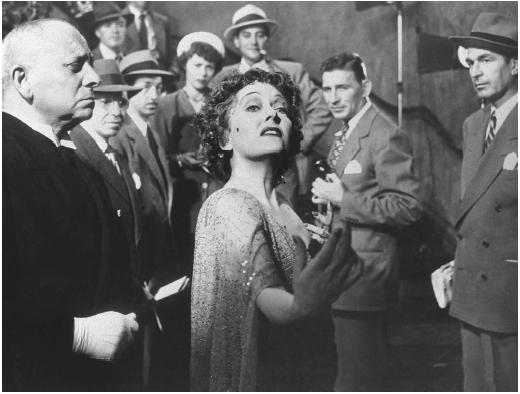
FIVE GREATEST FEMALE PERFORMANCES IN FILM (LEAD)

Greta Garbo in Camille

Katherine Hepburn in
Long Day's Journey into
Night


Maggie Smith in
The Prime of Miss Jean
Brodie

Gloria Swanson in
Sunset Boulevard


Bette Davis in
All Bout Eve

CALL OF THE WILDS: Reviews of Where the Wild Things Are and The Fantastic Mr. Fox

Where the Wild Things Are had to grow on me. It wasn’t until about halfway through that I finally figured out what it was about: a character study of a young boy with a classic case of serotonin deprived depression. Max Records plays Max (well, wasn’t that convenient), a young boy with wild mood swings of grandiose highs and debilitating lows, all out of proportion to the circumstances surrounding him, though those circumstances (he’s new to a neighborhood; no friend; child of divorce; a sister too much older than him to find him nothing but an annoyance; his mother has a new boyfriend) do add to his problematic situation. His mother, played excellently as usual by Catherine Keener, doesn’t really understand what’s going on nor has the time to figure it out. After a particularly egregious tantrum, Max runs away, finds a boat and sails to an island of gigantic and somewhat weird puppet/animal like creatures, strongly voiced by such actors as James Gandolfini, Catherine O’Hara and Forest Whitaker. The film began working for me when I realized that these creatures all had similar, though even deeper and more irrational, emotional problems than Max. For the first time, Max gets to see himself as other people see him. He returns home, but it’s unclear whether this adventure has really helped him. The creatures are wonderfully animated, especially the mouths, and the music and songs are heaps of fun. The main drawback may be Spike Jonze (who co-wrote the screenplay with Dave Eggers) who directs the piece as if he were Paul Greenglass doing a Bourne film. I found myself at times trying to fill in the blanks because Jonze had a yen for using jump cuts. But by the time it was all over, I was moved.

The Fantastic Mr. Fox is well…fabulous (bet you thought I was going to say “fantastic”, didn’t you; please, it would be so obvious to include that word in this review). It’s as clever and fun and quirky as Babe, which is saying quite a bit. There is one rather odd aspect to it. Fox and his friends are animals who can walk, talk, reason, etc., basically humans in animal bodies. But they feed on other animals, like chickens, geese, turkeys, etc. This is rather creepy and almost comes across as cannibalism; it’s actually borderline disturbing. Of course, if one realizes that the original story is by Roald Dahl, whose stories always did have a unique and somewhat creepy aspect to them, I suppose it shouldn’t be very surprising that this isn’t your typical everyday children’s film. The suave and debonair Fox is played by the suave and debonair George Clooney. He’s actually a character I would have little to do with in real life since he’s so incredibly vain and egocentric, running roughshod over everybody else, doing whatever he wants to do when he wants to do it and if anybody else has a problem with that, too bad (he’s also pretty rotten to his son). However, that is one of the great things about art—one can spend quality time with someone one would never have anything to do with in real life from the safety of a movie seat. His longer suffering wife is played by Meryl Streep (that makes three films in one year for both of them--aren't they the busy little bees) with an appropriately long suffering voice. The screenplay (by director Wes Anderson and the tres droll Noah—Squid and the Whale—Baumbach) is witty, energetic and never runs out of cleverness. The direction by Wes Anderson is ever so much the same; no scene is complete with some extra bit of visual manipulation that just gives it that something…well, extra, to make it memorable. The animation is remarkable, down to the moving hairs on the characters' face. It’s what is called sophisticated and adult; the question then is whether it will sell in the multiplex. One can only hope.