About Me

My photo
PLEASE NOTE: I have moved my blog to http://howardcasner.wordpress.com/. Please follow the link for all my updated postings. Thank you.

Friday, November 20, 2009

AFI POTPOURRI: PART TWO

Continuing with the films I saw at AFI:

SITA SINGS THE BLUES: One of the most delightful, cleverest and original animated features I’ve ever seen. It’s the Hindu legend of Sita, who was the bride of Rama until he did her wrong. The story is paralleled with the more modern story of the writer/director Nina Paley’s relationship with her own boyfriend who also did her wrong after he moved to India and didn’t break up with her until she moved to be with him. The animators use all sorts of styles, including, perhaps most delightfully, three shadow puppets of three people who tell the story of Sita, often arguing over the details and the meaning. It’s the universal tale of women who are treated badly (though what Rama did to Sita was far worse than what Nina’s boyfriend did to her). The theme is supported by Annette Hanshaw who sings, through Sita, a number of torch and blues songs (though perhaps one or two too many). A must see, though one wonders what Nina’s ex now thinks since no matter what he did to her, Nina got the final word.

FISH TANK: One of those coming of age stories of kids rebelling against their parental figures and losing their virginity. But don’t let they stop you from seeing this sharp and moving tale of teenage angst by the writer/director Andrea Arnold who also made one of my favorite films of 2006, Red Road. The lead character is 15 year old Mia played with ferocious non-stop fury by newcomer Katie Jarvis. Katie is angry, but it’s unclear why; she’s just angry, almost existentially so. She doesn’t get along with her mother or her sister or her friends (actually, she has no friends). She finds herself physically attracted to her mother’s most recent lover Connor, played by a sexually charged Michael Fassbender whose first entrance is in jeans with such a low rise one keeps expecting them to fall to the floor (or does one hope they will fall to the floor). Her only dream is dancing and an appointment she has made to audition for a dance troupe. Her hopes are constantly dashed. She has hot sex with Fassbender, who then tells her they can’t do it again. He turns out to be married and has a child and breaks Mia’s mother’s heart when he ups and leaves with no reason given. And the dance audition turns out to be for a strip club. But that doesn’t stop her from taking control of her life and going off with a boy a bit closer to her own age; it may seem like a downer ending, but it’s really not. The story itself gets a little off center when Mia discovers Connor is married; the author doesn’t seem to know exactly what to do next and fills the plotline with one red herring after another. But other than that, a coming of age film that rises above the others.

AJAMI: The Israeli entry in the best foreign language film category at the Oscars and a first rate film noir. The subject matter may make one a little queasy: it’s an Israeli film about Palestinians living in Israel in which the characters do nothing but engage in illegal activities and treat each other like dirt for much of the proceedings. At the same time, the story is not inherent to its ethnic background and could easily take place in New York, Paris, Los Angeles—and often has. It’s a thriller with one of those non-linear plots (script and directing by Scandar Copti and Yaron Shani) that became really popular after Tarrentino’s Pulp Fiction. It’s divided into chapters and though it might be a little difficult to fully understand how the first chapter affects the others (perhaps something got lost in the transition), it’s a suspenseful puzzle film that is very satisfying.

I KILLED MY MOTHER: I don’t want to talk about it. I Killed My Mother is the Canadian entry in the Oscar foreign film category (it takes place in Quebec and everybody speaks French), but it’s written, directed and stars a 19 year old in his film debut. That would be all right if the movie wasn’t any good. But it is and it’s just not fair and I don’t want to talk about it. It’s all about a high school kid’s troubling relationship with his mother, which often makes no sense, but is none the less fascinating and convincing. She’s often a monster, but he’s often an annoying little prick; but since she has all the power, she wins. It’s obviously a first film. Xavier Dolan, the writer/director (who couldn’t attend the screening at the AFI fest because he’s already working on his next feature, the asshole), sometimes loses track of what he’s saying or why there’s trouble in this non-paradise. At times it seems like it’s fury for fury’s sake, which at the age of 19, fury often is. But it’s an astonishing debut. I wish him well. I really do. No, really, I do. The bastard.

AFI POTPOURI: PART ONE

I attended the AFI film festival this year and it was fantastic. Audi bought out all the tickets and all the films were free. Seats were sold out on-line within minutes. But because there was a glitch in the system and the website kept saying everything was sold out (when in reality there were seats available at the time of the film), this worked out great for me since I only live a few blocks away from the venue at Grauman’s. I would stroll over and had no problem getting in. People soon caught on and all the shows tended to fill up, but it worked out perfectly for someone like me who basically has no life and fills his empty hours going to the movies.


Now as to what I saw. I generally avoided any movies I knew had distributors or I thought were bound to open and kept to the lesser known films. These will be snapshot reviews.


CITY OF LIFE AND DEATH: Devastating. A fictional dramatization of the Rape of Nanking by the Japanese after they invaded China in 1937. Words cannot describe the horrors that were visited upon the citizens of this capitol city. The director and writer (Chuan Lu) tells an epic story clearly and succinctly. The beautiful (if such a word should be used) black and white cinematography is by Yu Cao. The acting is strong with perhaps the most memorable scene being the execution of a Chinese national who was the assistant to the German owner of a local corporation; after managing to get his wife safely out of the country, he tells his captors that his wife was pregnant; no matter what they did to him, he had a son they could do nothing to. Apparently the film was first supported by the Chinese government (and was the mainland Chinese entry in the Oscar race) until it was deemed that the Japanese soldiers were treated with too much humanity and all support was withdrawn.


POLICE AJECTIVE: From the new wave of Romanian films comes this dark comedy about a policeman trying not to arrest a teenager for using drugs because he doesn’t see the point, moral or practical, of it. When the characters talk (screenplay and direction by Corneliu, 12:08 East of Bucharest, Porumboiu), they have these wonderfully bizarre comic conversations that sound like they’re out of Pinter of Karka. But almost half the film is devoted to the central character tailing and watching other characters. For this part, the tedium finally gets a bit too tedious and the film falls a bit flat. It’s half a good movie and also introduces the audience to a new sport: foot tennis, played on a tennis court with a tennis net in which the two sides kick a soccer ball to each other using only their feet. If the movie doesn’t come to a theater near you, the sport may come to a park just around the corner.


VINCERE: Marco (Fists in the Pocket) Bellochio’s new film about Mussolini’s first wife, Ida Dalser, with whom he had an illegitimate son and whom he later denied. I call it the Italian version of “he’s just not that into you”. Both Dalser and her son ended up in an insane asylum and it’s not hard to see why. Though there’s some implication that you are supposed to empathize with Ida, she comes across as such a whack job, one actually feels sorry for Mussolini. This is the love affair from hell, the one night stand who just won’t take no for an answer. In this movie, though Bellochio may not intend it, Ida seems first cousin to Jessica (Play Misty For Me) Walter and Glenn (Fatal Attraction) Close. It’s often a beautiful film to look at, but it doesn’t really work.


SOMETHING’S GONNA LIVE: A documentary about a few of the art directors and story board artists still alive (at least at the time this documentary was made, most have died since) who worked under the studio system. The audience loved it. I found it a bit dull, possibly because I thought it was going to be about these characters’ work, when it wasn’t. Instead it’s about growing old. That sounds cold of me, I know. And there are some moving moments as one has to focus on the mortality of life. But at the same time, one kept expecting something more, which never seemed to arrive. The most interesting parts are when Robert Boyle (who at the ripe young age of 100 received an honorary Oscar for his body of work) and Harold Michelson return to Bodega Bay where much of The Birds was filmed to see what it was now like (Boyle did the production design and Michelson did the storyboards for the Hitchcock film) and they get all old man curmudgeonly about the changes in the area. All in all, it’s an okay film, but didn’t really do much for me.

Monday, November 16, 2009

CAN'T BUY ME LOVE: Reviews of Capitalism: A Love Story and (500) Days of Summer

Michael Moore, of course, doesn’t make documentaries. Not really. He makes visual editorials and op-ed pieces and because of that, many people aren’t quite sure how to feel about his films. I love them and I think Capitalism: A Love Story is one of his finest so far. What never ceases to surprise me is how emotional I get whenever I watch one of his movies and there were times when …Love Story nearly brought me to tears (and I don’t mean the one with Ali McGraw which didn’t get the old ducts working at all). Who would have thought it: Michael Moore, the new director of weepies. No matter what one might say about Moore’s one sided approach to filmmaking, you can’t say he doesn’t care. It’s very rare that an artist can combine didacticism with art. Shaw and Brecht were masters at it, while Stanley Kramer, and for me, Oliver Stone, always fell short. But Moore knows how to make both a point and a movie.

There are scenes here that can stand with the best of the outrageousness found in a Dickens’ novel. A juvenile facility run for profit in which a judge gets a cut for every teenager he sends there sounds like something out of Oliver Twist. Even worse, the life insurance policies that companies take out on their workers (sometime without the workers even knowing it) not just sounds incredibly outrageous, it sounds like something out of a remake of Double Indemnity.

The movie ends on a note of hope. At the same time, one quickly realizes that the victories Moore records, though he makes them seem commonplace and happening on a daily basis, are actually a few and far between lot. Moore may want to give us hope, but in the end, there’s actually less of it than he suggests, which makes the movie all the more moving.


(500) Days of Summer is wonderful, absolutely wonderful. Did I mention how wonderful it is? Well, if I didn’t, let me tell you, it’s wonderful. It’s everything you wish American films, especially romantic comedies, were all the time, but are usually only in European ones (instead we get films like The Proposal and He’s Just Not That Into You). The biggest mystery here is not why the romance died in this film, it’s how the movie got financed in the first place.

Joseph Gordon-Levitt (who has somehow snuck up on us to become one of our finest actors after leaving 3rd Rock From the Son) plays a writer of greeting cards who is that rare male in movies—someone unashamed of his emotions. He wants to fall in love. And he does. Hard. But his romance ends in one of the most devastating ways possible: the person he’s in love with says she doesn’t want to fall in love and doesn’t want to be in a relationship, but about a month after breaking up, she gets married (the old “it’s not me, it’s you” routine). The story telling is very reminiscent of Annie Hall in which the writers (Scott Neustadter and Michael H. Weber) and director (Mark Webb) use all sorts of quirky and fun breaks in reality to tell the story, including a musical number in a park that not just parodies Enchanted, but outdoes it. And how often will you see a movie about people in L.A. in which no one drives, but everyone takes public transportation or a cab? That alone makes this movie worthwhile.

In the end, this is a feel good movie with a downer ending. It then tacks on an extra bit of whimsy and becomes an end cute love story. I do have one quibble: what’s so bad about making a living writing greeting cards? Mr. Deeds would turn over in his grave.

Saturday, October 31, 2009

Five Comedies about Serial Killers

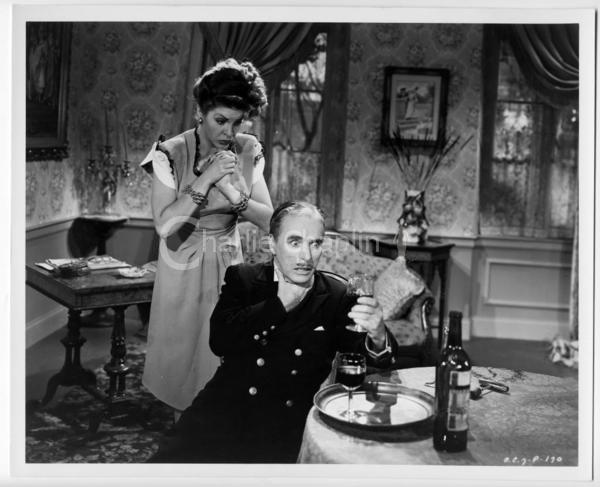
Monsieur Verdoux

Il Mostro


Kind Hearts and
Coronets


Serial Mom

Arsenic and Old Lace

IN WITH THE IN CROWD: Reviews of the movies In the Loop and the Informant

In the Loop may be a comedy, but it’s also one of the most depressing movies of the year. It’s political in a way only the British usually are—bitter, brittle and more bitchy than Noel Coward (House of Cards anyone). It’s also a study of contrasts between how the British get things done and how the Americans get things done. In England one bullies and threatens, at times becoming physically violent. To survive an assault, one simply stands up to it and refuses to let anyone get a leg up (a friend of mine says it’s all the outcome of British private schools and there are times you can almost hear someone say, “Sir, may I please have another”). In the U.S., one is manipulative and sneaky, dancing around everything, outfoxing someone while trying to find their weak spot. The only thing the two groups have in common is the number of four letter words they use. The story is all about the events leading up to a declaration of war between the U.S. and the Middle East. Though the country is never mentioned by name, it’s ridiculous not to realize the target is Iraq. Because of this, the movie begins to resemble French playwright Jean Giraudoux’s The Trojan War Will Not Take Place, in which a valiant Hector tries his best to stop a war that will not be stopped. In the end, even though there comes a moment when you think the good guys will win, it becomes clear that conflict is a foregone conclusion because the war with Iraq indeed did take place. The comedy then gives way to tragedy. The ensemble cast is first rate with Peter Capaldi the foul mouthed stand out doing his role of mid-level bureaucrat one better than the one he played in the terrific TV series, Torchwood: Children of Men. The script (by Jesse Armstrong, Simon Blackwell, Armando Iannucci—who also directed, Ian Martin and Tony Roche) is bollocksy brilliant, full of poetic vulgarities. The only problem here is that the script is so brilliant, it sometimes seems so carried away with itself, that one loses track of the some of the characters’ motivations. Somewhere along the way, I became a bit unclear just why some in England wanted to go to war and join forces with the U.S. and why others didn’t. See this as a double feature with Dr. Strangelove.


In the Informant! (with an exclamation point—excuse me), Matt Damon as Mark Whitacre joins the great sociopathic liars of the silver screen like Harriet Craig (Craig’s Wife), Stephen Glass (Shattered Glass), and Mary Tilford (The Children’s Hour). Not a bad group to be a member of. The story is about an FBI investigation into price fixing in the corn industry, but the real suspense is not if the FBI will make their case—the real suspense derives from how long Whitacre can keep up the lying and how often he can dig himself out of whatever hole he’s crawled into. I’m not sure it’s a brilliant performance. Damon is good, but there is a certain flatness to his performance. At the same time, there’s a certain flatness to everything: the cinematography, the bland 1970’s décor, the dated music by Marvin Hamlisch (though this last rises above the flatness). Of course, the 1970’s was a bland decade and director Steven Soderbergh seems to make the most of it and though I’m not sure how, it does seem to add something to the proceedings. The supporting cast also has that somewhat 1970’s look about them as well with the Smothers Brothers perhaps the most recognizable. It’s a well written entertainment (script by Scott Z. Burns) with perhaps its major flaw being the character of Ginger Whitacre, Whitacre’s wife, played by Melanie Lynskey. The author either couldn’t, or even worse, couldn’t be bothered, to try to understand what made Ginger tick. What little character she has is provided by Lynskey’s lovely, lilting voice. But the actress deserved better.

Monday, October 26, 2009

DESIGNING WOMEN: Reviews of Coco Before Chanel, My One and Only and Bright Star

It’s a little difficult to determine why, and therefore somewhat annoying that, Coco Before Chanel is as enjoyable as it is. After all, it’s a fairly standard biopic, as sturdy and strong as anything put out by Warner Brothers in the 1930’s. At the same time, it does have one thing many biopics don’t; it doesn’t try to tell us how important, how great, how significant the subject is. Coco Before Chanel imparts its story somewhat simply and to the point; not as if this is a biography of the greatest fashion designer of the 20th century, but as if it was nothing more than a study of what it was like to be a woman who wanted a career when fin de siècle was in the air. It also doesn’t try to bite off more than it should chew. The story line covers only a relatively short period of Chanel’s life, from the time she left an orphanage to the time she opened her first dressmaking shop, what appears to be but a few years.

Coco is played by Audrey Tatou with a dour face and an uningénue type temperament (which means she’s getting beyond what she began as, the French Audrey Hepburn). Her performance is impressive; perhaps not as impressive as Marion Cotillard’s turn as Edith Piaf in La vie en rose, but then Tatou hasn’t been given all the heavy breathing and melodramatic acrobatics Cotillard was (though it is odd the same thing happened to both characters; their married lovers died tragically—is this a French thing?). She also does what George C. Scott as Patton and Sean Penn as Harvey Milk did—in the future when you think of Chanel, whose face will you see? The original or Tatou’s?

When all is said and done, it should be noted that Coco Before Chanel falls into the standard women’s biopic in which what the character does with her life is not as important as is her relationship to the men in said life. Her life is defined not just by her achievements, but in how she relates to the opposite sex. To understand what I mean, consider that if Patton was a woman, the central dilemma would be not how he defeated the Germans, but in her having to chose between a husband and children and fighting the Battle of the Bulge (and no, I don’t mean weight loss). What may be doubly disturbing is that though this may be a chauvinistic approach, it is also what makes Coco Before Chanel the success it is. What may be even more curious is it was written by two women, Camille Fontaine and Anne Fontaine (who also directed).

My One is Only is an ice cream sundae that comes equipped with whip cream and a cherry on top. The whip cream is provided by Mark Rendall’s performance as Robbie, the somewhat swishy younger brother who gets the running gag of always landing the lead in a school play (including Oedipus of all things—what high school does Oedipus Rex) but never actually making it on stage. The cherry is the revelation that the central character in all this, Robbie’s older brother George, is actually a famous movie star—George Hamilton. The ice cream is provided by Renee Zellwegger as Anne Deveraux, a mother who divorces her cheating husband, takes her two kids, and goes gunning for old boyfriends to see if she can marry into money.

She sets her designs on, as has already been pointed out by other critics, a series of actors better known for their TV roles (shades of Julie Andrews as Gertrude Lawrence in Star!). Steven Weber is a hoot as an alcoholic gold digger who sticks Anne with a dinner bill. Eric McCormack has absolutely nothing to do as a rich playboy and proceeds to do absolutely nothing with it. Chris Noth doesn’t quite convince as an abusive army officer. That leaves David Koechner to rule the day in his role as the least sexiest, a charming and sweet natured scion of a wealthy family with a surprise mental problem.

There is nothing that wrong with the movie and the audience seemed to like it the more it went along. But it never quite rises above what it is. Some blame this on Zellweger who many didn’t buy as a fading southern belle. But the problem may lie with the director Richard Loncraine who played every scene of the clever screenplay by Charlie Peters for pathos whereas it might have worked better as a broader comedy, more Christopher Durang’s version of Tennessee Williams rather than Tennessee himself. It might have worked better if Zellweger had based Anne more on Bridget Jones than Blanche Dubois. But there is much to like here and the art direction and period detail help make it all a pleasant enough road trip.

Fanny Brawne is also a designer of clothes and from what I understand, she was suppose to have been known, at least among friends, for her taste. Personally, I found her fashions, as seen in the movie Bright Star, a bio film of her relationship with the poet John Keats, to be rather gaudy and all over the place. The same could not be said of the movie written and directed by Jane Campion. It’s a down to earth, anti-romantic depiction of a very romantic love story set during the romantic period. I greatly admired what Campion did with Henry James’ Portrait of a Lady, but I’m afraid I found this to be as dull as any Ivory/Merchant concoction. Even more dishwatery perhaps. I’m not sure why. It could be that the two leads, Abbie Cornish as Fannie and Ben Whishaw as Keats, who seem to be perfectly fine actors, just didn’t have enough fire in their roles. Perhaps this was Champion’s choice as well. Perhaps the last thing she wanted was the grand passion of Lawrence Olivier and Merle Oberon in Wuthering Heights. But for me, it didn’t even have the restrained sexual tension of a Jane Austen novel. The most interesting performance is given by Paul Schneider as the misogynistic cad Charles Armitage Brown who has the most fascinating line readings of any actor in some time. One almost hates him not just for his lines, but for the way he says them.

Thursday, October 15, 2009

APOCOLYPSE NOW REDUX REDUX REDUX: Reviews of Evangelion 1.0 You Are (Not) Alone and Zombieland

To continue the previous entry concerning a recent spate of movies basically about the end of the world.

Evangelion 1.0 You Are (Not) Alone (try saying that ten times fast) is also what I would call a curiosity. Set in the future when an evil organization sends super killing machines to destroy some city in Japan (I guess Godzilla and Mothra were previously indisposed) and there’s only one organization that can stop them. Each evil machine seems to learn from the defeat of the previous one so that old strategies and methods of defense quickly become obsolete (it’s just as true in modern warfare, though it takes a little longer). In other words, it’s like a video game where each victory isn’t a victory, but just jumps you up another level. In true anime form, the story (by Hideaki Anno, who also surpervised the directing) holds together kinda, sorta, but never really makes much sense, though it’s difficult to say whether this might at least partially be due to this being the second installment in a series. True, I haven’t seen the first one, but I doubt it would make that much of a difference. The animation is often beautiful and there are some fun scenes (though also one disturbing one where a teenager ends up lying naked on top of his naked sister—it’s suppose to be tres droll, but is more a tad disturbing). In the end, it falls to two people, twins (the aforementioned brother and sister, but with their clothes on), the offspring of the scientist who invented the weapon that can defeat the bad guys, to save their city. For some reason, these two are the only ones who can operate Evangeline, the robotic fighting machine that is mankind’s only hope, and the operating of it leads to all sorts of “why doesn’t daddy love me” conflicts. The male twin is also the lead. He spends much of his down time when he’s not saving the world being bullied at his school and pushed around by other people, which seems to me to be an odd way to treat the only person who can stop an evil organization from destroying the world. But this is anime, after all.

Zombieland is what is known as a post modern zombie movie, i.e., it’s not about how we got zombie’s so much as being about how we live in a world in which zombies are assumed. It’s also post modern in the way it is self aware of what it is, which is very tongue in cheek, at least when the cheeks are not throwing up vile vomit. It revolves around Columbus, a germaphobic loner played by Jessie Eisenberg in his usual nerdy persona. Columbus has 32 rules for surviving zombies, all very smart ones. Unfortunately (for me and apparently for me only, because everyone I talk to loooooooves this movie), the writers Rhett Reese and Paul Wernick don’t seem to think they have to play by any rules at all, especially when it comes to the actions of the characters, who tend to do things more in accordance with the style and objective of the authors rather than what they would really do in such a situation. This means that the characters are extremely smart when Reese and Wernick need them to be, and extremely and inexcusably stupid when Reese and Wernick need them to be. On the plus side, this allows for some clever scenes, especially a very funny Saturday Night Live type sketch starring Bill Murray in a cameo (though the basic comic idea here has already been done in Shawn of the Dead, a movie I preferred overall). At its worst, you can feel nagged and annoyed at the arbitrary nature of much of it. At its best, you can just relax (well, relax as much as you can with the fear that the next bathroom door you open will have a zombie in it) and go along for the ride. The characterizations and dialogue are above average, the most clever aspect of it being that though Columbus’s obsessive compulsiveness and various phobias are the parts of his personalities responsible for his survival (imagine a world in which only Monk and Felix Unger survive), at the same time, the arrival of zombies is the impetus that cures him of his germaphobia and saves him from his destiny of masturbation being his only method of sexual release. Abigail Breslin, as a 12 year old con artist, gives perhaps the best performance here (she’s almost unrecognizable). Though everybody works very hard, both behind and in front of the camera, and the apocalyptic scenery of empty streets and deserted landscapes have a certain beauty to them, in the end, for me, it never really rises to what it wants to be.