About Me
- Howard Casner
- PLEASE NOTE: I have moved my blog to http://howardcasner.wordpress.com/. Please follow the link for all my updated postings. Thank you.
Wednesday, March 4, 2009
HORTON FOOTE PASSES AWAY AT 92
Horton Foote, the greatest living American playwright along with David Mamet, Sam Shephard and Tony Kushner, has passed away. I always considered him to be vastly underrated and never felt his plays were produced enough. Perhaps my favorite is the play 1917, about the Great Flu Epidemic, which greatly influenced my own writing. It's hard to believe he's gone. He was someone you just thought was going to live forever, like your father.


THINGS THAT PISS SCREENPLAY READERS OFF 3/4/09
This entry will be dedicated to something that has been eating at me and building up inside me ever since I moved to L.A. and that is the lack of awareness on the part of the screenwriter as to what is actually going on in the movie world when it comes to screenwriting. And this lack of awareness really pisses us readers off.
After reading hundreds, if not thousands of screenplays, over the last number of years, it’s obvious that most writers don’t have a clue as to what is going on in screenwriting outside that how to book they bought or that film school course they took (ah, yes, film school courses on screenwriting, the death of many a good writer). Most of the screenplays entered into contests or submitted to agencies are incredibly formulaic with very few original or exciting ideas. It gets to the point where I feel like I’m Gene Wilder in The Producers, begging for his blue blankie because he’s surrounded by thousands of three hole punched manuscripts held together by two brads, and not one of them worth mentioning (you have seen the original The Producers so you can understand that reference, haven’t you? If not, rent it immediately, you idiot; you’re part of the problem, not the solution).
So I am going to make a suggestion that should, in and of itself, make you a far better writer that almost anything suggested in a book, video or website: once or, heaven forbid, even twice a week, whether at the movie theater, on TV, via Netflix or Blockbuster, see a movie outside your comfort zone.
By this I mean a classic film (you know, those movies your father and grandfather keep telling your are far better than anything made today—it’s not true, they’re not inherently better, but that doesn’t mean they’re worthless); an independent film (you know, the kinds of movies you need to be making so that one day you’ll be hired to write the next Spider Man); or a foreign film (yes, you might have to read—deal with it).
I’m not telling you to like them. I’m not telling you to think they’re any good. I’m not even telling you to tell your bromantic best friend you actually watched the latest François Ozon (that’s what rentals are for, so you can see these films alone, in the privacy of your bedroom—if your friend asks what you’re doing in there by yourself for such long periods of time, just tell him your masturbating; he won’t ask again, or he’ll want to know what your technique is). What I am telling you is to see these films, absorb them and learn from them.
I’m exaggerating, of course. I’ve read many more than a few that have shown an originality, edginess and chance taking that give me a reason to go on living another day. But it’s also not unusual for me to tell a writer that I read a script that was very reminiscent of Caché, or La Moustache, or 13 Tzameti, or I’ve asked a fellow writer if they’ve seen the latest from Pedro Almodovar or anything by Krzyztof Kieslowski, and they have absolutely no idea what or who I’m talking about. What are they teaching them in schools these days?
Screenwriting has become something of a tautology in the U.S. Why do you write a screenplay using a certain formula? Because a book says that these are the movies that get made. Why are these movies the ones that get made? Because the screenplays people write are based on a formula from a book that says that this is the way to write a screenplay that gets made. This sort of circular reasoning has come about mainly because books often tend to analyze screenplays that are the most popular financially rather than screenplays that have been judged to be the best (I was in a workshop once where the leader told someone his romantic comedy needed a happy ending like When Harry Met Sally; when the person said he was aiming for a more ambiguous ending like The Break Up, the leader told the writer that When Harry Met Sally made more money).
But it also comes about because most screenwriters I read don’t have a vision. They often have nothing to say. They want to write a movie, but other than making a living at it, don’t really have a reason to. Most screenplays are sort of the equivalent of those paintings one sees at airport and hotel shows, rows and rows of horses and landscapes—technically well done, perhaps, but devoid of any inspiration or soul.
So take a chance, writers. Expand your world. See something you would never think of seeing because it doesn’t fit into your predetermined world of what makes a good movie. They won’t bite; they might pierce your soul and leave a wound that will never heal, but that’s another story.
So that’s what pisses us off. Formulaic movies written according to some arbitrary rules rather than ambitious and unique stories that really show what you have to offer as a screenwriter.
After reading hundreds, if not thousands of screenplays, over the last number of years, it’s obvious that most writers don’t have a clue as to what is going on in screenwriting outside that how to book they bought or that film school course they took (ah, yes, film school courses on screenwriting, the death of many a good writer). Most of the screenplays entered into contests or submitted to agencies are incredibly formulaic with very few original or exciting ideas. It gets to the point where I feel like I’m Gene Wilder in The Producers, begging for his blue blankie because he’s surrounded by thousands of three hole punched manuscripts held together by two brads, and not one of them worth mentioning (you have seen the original The Producers so you can understand that reference, haven’t you? If not, rent it immediately, you idiot; you’re part of the problem, not the solution).
So I am going to make a suggestion that should, in and of itself, make you a far better writer that almost anything suggested in a book, video or website: once or, heaven forbid, even twice a week, whether at the movie theater, on TV, via Netflix or Blockbuster, see a movie outside your comfort zone.
By this I mean a classic film (you know, those movies your father and grandfather keep telling your are far better than anything made today—it’s not true, they’re not inherently better, but that doesn’t mean they’re worthless); an independent film (you know, the kinds of movies you need to be making so that one day you’ll be hired to write the next Spider Man); or a foreign film (yes, you might have to read—deal with it).
I’m not telling you to like them. I’m not telling you to think they’re any good. I’m not even telling you to tell your bromantic best friend you actually watched the latest François Ozon (that’s what rentals are for, so you can see these films alone, in the privacy of your bedroom—if your friend asks what you’re doing in there by yourself for such long periods of time, just tell him your masturbating; he won’t ask again, or he’ll want to know what your technique is). What I am telling you is to see these films, absorb them and learn from them.
I’m exaggerating, of course. I’ve read many more than a few that have shown an originality, edginess and chance taking that give me a reason to go on living another day. But it’s also not unusual for me to tell a writer that I read a script that was very reminiscent of Caché, or La Moustache, or 13 Tzameti, or I’ve asked a fellow writer if they’ve seen the latest from Pedro Almodovar or anything by Krzyztof Kieslowski, and they have absolutely no idea what or who I’m talking about. What are they teaching them in schools these days?
Screenwriting has become something of a tautology in the U.S. Why do you write a screenplay using a certain formula? Because a book says that these are the movies that get made. Why are these movies the ones that get made? Because the screenplays people write are based on a formula from a book that says that this is the way to write a screenplay that gets made. This sort of circular reasoning has come about mainly because books often tend to analyze screenplays that are the most popular financially rather than screenplays that have been judged to be the best (I was in a workshop once where the leader told someone his romantic comedy needed a happy ending like When Harry Met Sally; when the person said he was aiming for a more ambiguous ending like The Break Up, the leader told the writer that When Harry Met Sally made more money).
But it also comes about because most screenwriters I read don’t have a vision. They often have nothing to say. They want to write a movie, but other than making a living at it, don’t really have a reason to. Most screenplays are sort of the equivalent of those paintings one sees at airport and hotel shows, rows and rows of horses and landscapes—technically well done, perhaps, but devoid of any inspiration or soul.
So take a chance, writers. Expand your world. See something you would never think of seeing because it doesn’t fit into your predetermined world of what makes a good movie. They won’t bite; they might pierce your soul and leave a wound that will never heal, but that’s another story.
So that’s what pisses us off. Formulaic movies written according to some arbitrary rules rather than ambitious and unique stories that really show what you have to offer as a screenwriter.
Tuesday, March 3, 2009
The Five Greatest Gay Films
The Five Greatest of Something: an occasional entry when I don’t have anything else to report and just want to put something on line.


Fox and His
 An Englishman Abroad
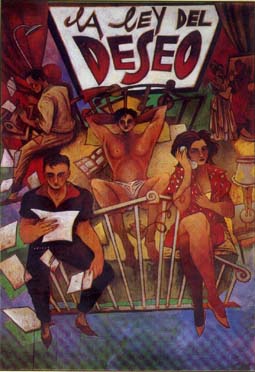
Law of Desire


The Bitter Tears
of Petra von Kant

Sunday, Bloody Sunday

Fox and His
Friends
 An Englishman Abroad
Law of Desire
Monday, March 2, 2009
Must Read After My Death and The International

Must Read After My Death is a documentary about a dysfunctional family during the 1960’s and ‘70’s made up of found material: transcripts of tapes and hours of home videos made by the grandparents, parents, aunts and uncles of the director, Morgan Dews. There is a lot of stűrm and drang in the relationships, but what was odd for me was that by the time it was all over, I wasn’t sure what went wrong with the family. That isn’t necessarily a bad thing, except that I really felt I was supposed to know. The filmmaker seemed to want to lay the blame totally on the shoulders of the alcoholic and too demanding father (though I could very well be wrong). But reading between the lines (or cells), there also seem to be two other culprits: a mother who may have suffered from depression to such an extent that she can’t run a household, and a faith in psychoanalysis that may have been woefully mislaid. Various family members attended therapy sessions for hours a week and their putting down all their thoughts on tape was just a reflection of this dependence on the analytic cure. But if one has to go to therapy for the number of years these people did and nothing changes, and the therapists can’t seem to point out what is obviously wrong in the family, then the therapists must hold themselves equally accountable for the family’s dysfunction. But the movie doesn’t seem to think this way. When the father dies, the dysfunction ends. But does that mean the father was the cause? Well, the way the movie is written, at this same time, the mother also no longer has to take care of the large household and the therapy comes to an end. Coincidence? Maybe, maybe not. All in all, one could actually view this movie as a Scientologist’s wet dream.

The International is the new, big, studio film by the originally more independent German filmmaker Tom Twyker. It’s one of these over the top paranoid thrillers in which an organization seems to have the omnipotence of God and can do anything they want and manipulate the world with no problem, yet still can’t stop Obama and the Democrats from being elected to office. It’s also one of those films in which the bad guys have no trouble killing off anybody they want except the heroes. Overall, Twyker’s direction is as bland as the story, but he has a great eye for architecture and there’s one well staged shoot out in the Guggenheim museum that ultimately fails because the police show up at the convenience of the screenwriter rather than how they would in real life. The acting’s fine, though Clive Owen is on such a high note of tension from the beginning, he doesn’t really have any place to go. His reactions to the dirty deeds of the bad guys remind one of Claude Rains in Casablanca who is shocked, shocked that something illegal is going on. Armin Mueller-Stahl is around to give the picture class.
Other films of Twyker highly recommended: Winter Sleepers, Run, Lola, Run, The Princess and the Warrior and Heaven.
RUSHDIE DIDN'T LIKE SLUMDOG MILLIONAIRE, SO ONE NEWS SOURCE REMINDS PEOPLE HE STILL HAS A FATWA OUT ON HIM
In a news item dated 3/2/2009 on the News from Studio Briefing section of IMDB, an article reports on Salmon Rushdie's negative critique of Slumdog Millionaire. What is disturbing (or perhaps disturbingly funny since it's hard to believe the sight meant to imply anything) is that at the end, the article reminds its readers not just that Rushdie had a fatwa put on him, but for some reason the article feels the need to remind people that the fatwa has yet to be lifted. I know that people really, really, really liked Slumdog Millionaire, but isn't this going a bit far?
http://www.imdb.com/news/ni0695717/
http://www.imdb.com/news/ni0695717/
Sunday, March 1, 2009
THINGS THAT PISS SCREENPLAY READERS OFF, 3/1/09
Since I am doing coverage for various screenplay/teleplay competitions as well as production companies, I thought I would use this time to write down, on occasion, my reflections and talk about issues I run across as I read the myriads and myriads of submissions. Forgive me if the pomposity bleeds through every once in awhile, but I have to put something on this blog and pomposity has never stopped me from giving my opinion in the past.
There may not seem to be any rhyme or reason to the thoughts I put down; often something will just occur to me or I’ll run across something in a script that makes me break out in hives. I will often talk generally about a topic. There will also be departments of reoccurring comments (like do or don’t do this in a narrative; know your terms; etc.). But there will definitely be one constant theme: things that PISS US OFF (and by “us”, I mean readers and providers of coverage). And believe me, there is one thing you don’t want to do to a reader and that is PISS HIM OR HER OFF. And yes, we readers talk about these things when we get together, sometimes laughing as viciously as the popular high school students do when they make comments about the uncool kids.
I thought I would start with what is probably the most boring, yet still incredibly important, in many cases the most important, issue in writing screenplays: narrative and what is industry standard.
This is perhaps the most difficult issue to raise because, based on my private consultations with writers as well as discussion in writing groups, it is the main topic most writers simply don’t want to, or can’t accept, as being important. In fact, whenever I bring it up, you can always see that raise of the eyebrow and impatient smirk the author pretends he hopes is not noticed, but at the same time definitely wants me to have seen (it’s the same look English teachers get when teaching grammar). People simply refuse to believe that well written narrative is important and that badly written narrative can make or break a script.
What’s doubly annoying here is that industry standard narrative has nothing to do with one’s ability as a writer; it has little to do with whether one is any good or not. And on top of it, it is the easiest thing to fix or get right, so easy, that it makes me want to slap that smirking eyebrow off a writer’s face the minute it goes up like a theater curtain. It’s not unusual for a writer to take it all so personally. They act as if you’re Simon Callow on American Idol and they’ve been told that they have no chance of ever making it in the movies when all he’s really telling you is that your mike isn’t turned on; yeah, you look like an idiot, but it doesn’t make you a bad singer.
And actually I understand. Believe me, I do. Before I started doing coverage and script consultation, I also would semi-secretly ridicule any feedback on narrative. But once I started reading script after script, I discovered that industry standard narrative as well as properly punctuated and grammatically correct prose was not just the arbitrary rules of a group of old guys strutting their testosterone; it actually made a script much, much, much, much, much, much, much, much easier to read and follow (much). And believe me when I say on behalf of my tribe, the last thing you want is to give us a script that is hard to read or follow. It’s annoying, frustrating and frankly, it PISSES US OFF.
So to start, here are the first of an occasional listing of do’s and don’ts for narrative. Please keep in mind that occasionally breaking the rules or simply making a mistake is not going to piss us off. And there’s always the possibility that a great script will shine through (if you really want to take that chance). But a constant breaking of these rules will definitely PISS US OFF:
1. Narrative paragraphs should never be more than 2 to 3 lines long. Narrative paragraphs in actions sequences should be even shorter. Any longer than this, especially if you have several narrative paragraphs in a row, is hard to read. And hard to read narrative PISSES US OFF.
2. Narrative paragraphs should be to the point, describing action, keeping description to a minimum. They should not be literary or metaphorical (not “the horns start beeping like a flock of geese”, but “all the cars horns start beeping”). The reason for this is that if you don’t get that absolutely perfect metaphor or simile, then we as readers will have to stop and think, now just what did he mean by that clever turn of phrase? You never, never, never, never, never want the reader to have to stop and figure out what something means. I know, I know. Your literary turn of phrase is so brilliant that everyone will instantly understand what you’re talking about. Don’t kid yourself, kid. What you’re really doing is PISSING US OFF, royally. If you have to use a literary model for your narrative paragraphs, don’t look to Faulkner or Proust, look to Hemingway.
More of what PISSES US OFF to come.
There may not seem to be any rhyme or reason to the thoughts I put down; often something will just occur to me or I’ll run across something in a script that makes me break out in hives. I will often talk generally about a topic. There will also be departments of reoccurring comments (like do or don’t do this in a narrative; know your terms; etc.). But there will definitely be one constant theme: things that PISS US OFF (and by “us”, I mean readers and providers of coverage). And believe me, there is one thing you don’t want to do to a reader and that is PISS HIM OR HER OFF. And yes, we readers talk about these things when we get together, sometimes laughing as viciously as the popular high school students do when they make comments about the uncool kids.
I thought I would start with what is probably the most boring, yet still incredibly important, in many cases the most important, issue in writing screenplays: narrative and what is industry standard.
This is perhaps the most difficult issue to raise because, based on my private consultations with writers as well as discussion in writing groups, it is the main topic most writers simply don’t want to, or can’t accept, as being important. In fact, whenever I bring it up, you can always see that raise of the eyebrow and impatient smirk the author pretends he hopes is not noticed, but at the same time definitely wants me to have seen (it’s the same look English teachers get when teaching grammar). People simply refuse to believe that well written narrative is important and that badly written narrative can make or break a script.
What’s doubly annoying here is that industry standard narrative has nothing to do with one’s ability as a writer; it has little to do with whether one is any good or not. And on top of it, it is the easiest thing to fix or get right, so easy, that it makes me want to slap that smirking eyebrow off a writer’s face the minute it goes up like a theater curtain. It’s not unusual for a writer to take it all so personally. They act as if you’re Simon Callow on American Idol and they’ve been told that they have no chance of ever making it in the movies when all he’s really telling you is that your mike isn’t turned on; yeah, you look like an idiot, but it doesn’t make you a bad singer.
And actually I understand. Believe me, I do. Before I started doing coverage and script consultation, I also would semi-secretly ridicule any feedback on narrative. But once I started reading script after script, I discovered that industry standard narrative as well as properly punctuated and grammatically correct prose was not just the arbitrary rules of a group of old guys strutting their testosterone; it actually made a script much, much, much, much, much, much, much, much easier to read and follow (much). And believe me when I say on behalf of my tribe, the last thing you want is to give us a script that is hard to read or follow. It’s annoying, frustrating and frankly, it PISSES US OFF.
So to start, here are the first of an occasional listing of do’s and don’ts for narrative. Please keep in mind that occasionally breaking the rules or simply making a mistake is not going to piss us off. And there’s always the possibility that a great script will shine through (if you really want to take that chance). But a constant breaking of these rules will definitely PISS US OFF:
1. Narrative paragraphs should never be more than 2 to 3 lines long. Narrative paragraphs in actions sequences should be even shorter. Any longer than this, especially if you have several narrative paragraphs in a row, is hard to read. And hard to read narrative PISSES US OFF.
2. Narrative paragraphs should be to the point, describing action, keeping description to a minimum. They should not be literary or metaphorical (not “the horns start beeping like a flock of geese”, but “all the cars horns start beeping”). The reason for this is that if you don’t get that absolutely perfect metaphor or simile, then we as readers will have to stop and think, now just what did he mean by that clever turn of phrase? You never, never, never, never, never want the reader to have to stop and figure out what something means. I know, I know. Your literary turn of phrase is so brilliant that everyone will instantly understand what you’re talking about. Don’t kid yourself, kid. What you’re really doing is PISSING US OFF, royally. If you have to use a literary model for your narrative paragraphs, don’t look to Faulkner or Proust, look to Hemingway.
More of what PISSES US OFF to come.
“Seraphine” Saluted with Seven French Cesars
From indiewire.com:
For the full story go to:
http://www.indiewire.com/article/seraphine_saluted_with_seven_french_cesars/pem
by Eugene Hernandez
Martin Provost’s “Seraphine” won seven Cesar Awards in Paris last night, honored as best picture of the year and winning prizes for best original screenplay (Martin Provost), best actress (Yolande Moreau), best cinematography (Laurent Brunet), best costume design (Madeline Fontaine), best original score (Michael Galasso), and best set design (Thierry Francois).
Martin Provost’s “Seraphine” won seven Cesar Awards in Paris last night, honored as best picture of the year and winning prizes for best original screenplay (Martin Provost), best actress (Yolande Moreau), best cinematography (Laurent Brunet), best costume design (Madeline Fontaine), best original score (Michael Galasso), and best set design (Thierry Francois).
For the full story go to:
http://www.indiewire.com/article/seraphine_saluted_with_seven_french_cesars/pem
Subscribe to:
Posts (Atom)


