About Me

My photo
PLEASE NOTE: I have moved my blog to http://howardcasner.wordpress.com/. Please follow the link for all my updated postings. Thank you.

Wednesday, August 12, 2009

BACKSTAGE AT A CONTEST: INSIGHT AS TO HOW SCREENPLAYS ARE CHOSEN FOR A TOP 20 LIST

One of the things I do for a living (let's face it, until I sell that screenplay for a million dollars, it is the only thing I do for a living) is do coverage, script consultation and read scripts for contests. I actually really like doing it because, at the risk of sounding incredibly egotistical and near sociopathic, I am incredibly good at it. It's not unusual for my first reads to make it to the top ten (when I started at Slamdance, the first four years in a row one of my first reads was chosen first place--even if I didn't vote for it).

I thought I might write about something that happened at the end of a contest once upon a time when the quarter finalists and finalists were being decided, something that might shed some light on how the process works. This time the process was a bit more interesting than before because the person who ran it had me do something she hadn't had me do before. She asked me to pick my top twenty. This meant I had to reduce a list of 35 that I recommended for a further read (not just my first reads, but also second and third reads) to twenty. Now, of course, some of the choices were easy (in fact, I think she and I agreed on what was the obvious best script, though I could be wrong). But after choosing the obvious ones, it became more and more painful to winnow it down to 20.
But I did it. Since this was the first time I did this for this contest, I was actually kind of panicked. How many of my choices would the head of the contest agree with or would she think, "this guy is really full of shit if he thinks he knows a good script from a bad one". In other words, would this list confirm that I knew what I was talking about, or would it show me to be a fraud?
Add to this that I didn't know which of my first reads got a second and then third read, which meant I could be putting scripts on my top twenty that I liked, but others thought were the product of the mentally ill off spring of a brother and sister, scripts which might have been dumped weeks before.
Then, after submitting my list, I got an e-mail back and she asked why three particular scripts didn't make my top ten. And I didn't know what to say and I panicked, of course. I did like all three scripts, but one can't put everything on a top twenty. But what could I say? I did respond with my reasons (I thought one incredibly well written, but too formulaic, etc.) and she was very supportive of my reasonings (though not in full agreement).
However, something interesting did happen here that might give insight into the decision making process. Out of the top 35, there were eight that I considered to be somewhat similar in tone and style, what I call small, independent films. These are actually my favorite types of films. However, I wasn't about to have eight of the same type of films on my top twenty list, so I ended up with only four of them on the list. Two of the three she had e-mailed about had ended up on the cutting room floor for the reason (though not completely, I did have some problems with them that also made me leave them out) that they were too similar to some other scripts.
When I told a friend this, he asked me, "But aren't you suppose to chose the best script no matter the genre, niche or style, etc.". Yes and no. What I told him is that it is like the choosing of Sonia Sotomayor--at some point there is no such thing as the best. There gets a point where there are a bunch of equals. So what do you do then? Well, you bring other elements into the decision making process, like not wanting to have two time travel movies in the top ten even if both are extremely well written.
She then asked me to something even more nightmarish: winnow my top twenty down to a top seven. This was so painful. But it had to be done. The interesting part of this was that she e-mailed me and asked why I included one particular one; she thought it very flawed. It was a second read on my part, so it wasn't like I was the first person to like it, but again, I had to explain my reasoning. Though one of the things I said, among others, was that it could be that it was just one of those scripts that effects one strongly and one may never be able to rationally explain why. And all readers have those (it can lead to some very interesting discussions/arguments at decision making times).
What was also interesting here is that of the seven (actually nine because I mentioned two more that I said were so difficult to remove, but I did because again, I felt they were too similar in style to another one in the top seven--the three were all high concept films), none were my first reads. This particular year was perhaps one of the only times where, though I liked many of my first reads, they didn't excite me as much as other people's first reads. In fact, I was getting frustrated at times wondering why everybody else was getting all the good scripts (but it happens; scripts are assigned randomly and there has to be a year where others are going to get all the good ones).
But it didn't stop there. All nine of the ones I chose here were going to be in the top 20. Now I had to chose two from my list that weren't in the top nine, two that I wanted to fight for in order to help fill out the top 20 list. That was also very hard, but I chose two comedies that didn't cross over to other genres, one because I did like them very much, but two, because I thought I hadn't recommended enough pure comedies.
So I don't know if this gives people who enter contests any more of an insight as to how some decisions are made, but I thought it might be something worthwhile letting people in on.

Saturday, August 8, 2009

BOYS WILL BE BOYS, PART DUEX - REVIEW OF HUMPDAY

Humpday is about two straight men who decide to have sex on film as an art piece with the plan of entering it in a film festival called Humpfest. Actually, from my perspective, it’s about a writer and director, Lynn Shelton, who thinks she is doing something daring and unique, when, as in the movie The Art of Being Straight, she is hopelessly behind the times. The comic high point of the story, unintentionally so, is a party that the two breeders, played by Mark Duplass and Joshua Leonard, attend. Duplass calls the party Dionysian, but the party is only Dionysian to people who think the orgy scene in La Dolce Vita is a realistic orgy. Of course, that may be the point here, but Shelton doesn’t let the audience know whether she actually believes the party is Dionysian or whether we are suppose to laugh at Duplass because he actually thinks it is. This is actually topped when Leonard suggests that for Humpfest he and Duplass do something unique—film two straight men having sex. Now this is only unique to people who have no idea what’s been going on in the world of pornography in the last ten years or more where “gay for pay” has been one of the most popular and fastest growing subsidiaries (this Dionysian party actually has a couple of gay men there, yet none of them decided to point out the absurdity of Leonard’s statement). In the end, the two men can’t go through with it (thankfully; if I’m going to see two straight men having sex, it sure ain’t going to be two men with mediocre bodies like this). So what is the point of the film? What did these two people learn about themselves? It’s not clear, at least to me, that Shelton really thought that through. It’s as if she thought all she had to do was come up with a high concept mumble core film and the rest would fall into place, but I question whether it did. I still remember the wonderful morning after scene in Y Tu Mama Tambien in which the two male characters, after having a three way the night before in which they kissed, wake up in horror realizing that terrifying fact that two straight men can actually enjoy having sex together; the result was that they never wanted to see each other again. I’m not convinced that anything like that happens here.

Thursday, August 6, 2009

AND THEY'RE OUT OF THERE

I just saw that the two Bens, Lyons and Mankiewicz, are no longer going to be representing the acme of movie criticism when they are replaced on their show At the Movies by A.O. (Tony) Scott of the New York Times and Michael Phillips of the Chicago Tribune. From what everyone says out here in Hollywood, they will not be missed.
I never really minded Mankiewicz, but I have to be honest and say there was just something about Lyons that made the hair on my neck (during the periods when I didn't shave them) stand up on end. It wasn't even his opinions. It was just him. One of those lack of chemistry things, I guess.
But it will be good getting the show back on track with two critics who seem to be better suited to the job.

BUDD SHULBERG HANGS UP HIS RUNNING SHOES

Budd Shulberg, one of the finer screenwriters in Hollywood, author of such films as On the Waterfront, A Face in the Crowd and The Harder They Fall has passed away. He named names during the blacklist years because he grew disallusioned with the Communist party. On the Watefront was often seen as an apologia for his actions, though he denied it while at the same time claiming that he poured his heart and soul and everything he was going through at the time into the screenplay. Both can be true.
I highly recommend A Face in the Crowd, an underseen movie starring Andy Griffith (of all people) as a nobody who climbs to the top of TV as new-facist television star. It is perhaps Griffith's greatest performance with wonderful turns from Patricia Neal, Anthony Franciosa, Walter Matthau (in his pre-Jack Lemmon days) and Lee Remick as a jail bait cheerleader.
Schulberg was also known for scandalizing Hollywood (which seems hardly possible) with his book What Makes Sammy Run?, a book about an amoral bastard who works his way up from mailroom to producer. Like the Michael Douglas character in Wall Street, though the character was presented as a villain, people turned Shulberg's Sammy Glick into the poster boy of Hollywood success.
RIP

Tuesday, August 4, 2009

MOST DEPRESSING AD OF THE WEEK

While walking down the street I saw an billboard for a bank on the side of a building:

More ATM's that unsold screenplays in Los Angeles.

Why Buy a Script when you can make it from scratch

I just finished reading What Just Happened? Bitter Hollywood Tales from the Front Line by Art Linson. Linson is the producer of such films as The Untouchables, Scrooged, This Boy's Life and many, many more. This particular book, which is fascinating in the same way that all books about the making of films in Hollywood is fascinating, is mainly about the movies The Edge, Great Expectations, Pushing Tin, The Fight Club and Sunset Strip.
For those of you who've always wondered about the origin of the story line about the Bruce Willis character having gained weight and not wanting to shave a beard in the movie What Just Happened (produced by Linson), you'll find it here in the problems Linson faced (pun intended) with Alec Baldwin while shooting the Edge.
What I found most interesting in the book is that Linson never bought (he seemed to have never even read or even heard of the concept of) a spec script, a screenplay already written. Instead, he always made a movie from scratch (like our grandmothers or great grandmothers would make cakes). This made no sense to me. It's not that I believe that making a movie from a spec script is going to guarantee a higher quality of movie than one that originates between Linson sitting down with David Mamet and bullshitting until they came up with an idea for a film about a bear; it just seems so damned inefficient.
Though the stories of how the movies he made got made is fascinating, he comes up short when trying to explain why so many of them didn't work. In the end, though he so wanted to blame marketing (and he often does), his answer is more existential: there is nothing to know because no one really knows why something doesn't come together and work in the long run. He may be right. They say hindsight is 20/20, but not always.
But Linson's still making movies and I'm writing about it in a blog, so who am I to say.

WHERE HAVE ALL THE STRONG WOMEN GONE, PART DEUX (TO EUROPE APPARENTLY)

Everyone complains about the roles written for women, but no one’s doing anything about it. Well, that’s not totally true since three movies with strong female characters have opened in the last couple of months, but you might not know it based on the attention and box office given to such movies as The Ugly Truth and The Proposal.

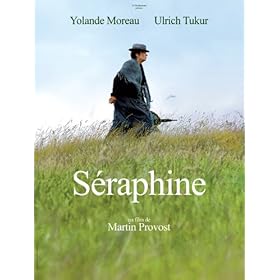
Seraphine is the lovely, lyrical and based on a true story film about an obscure painter in the early 1900’s (at least obscure to American audiences), a lower class working woman who does cleaning and laundry but paints in her free time because she received a message from her guardian angel to do so. She does the usual artist stuff: she talks to trees (though fortunately, not like Clint Eastwood in Paint Your Wagon); makes much of her own paint from various liquids, like chicken blood, that she steals because she doesn’t have enough money to buy them; goes without food to purchase her supplies; and stays up all night singing and making awful noises while painting, driving her landlord to distraction. She’s also out of step. The art world is changing, but new forms like impressionism are still finding it difficult to gain a foothold, so Seraphine is ridiculed by her bourgeois employee for her somewhat fanciful interpretation of the natural world she sees around her. But Seraphine doesn’t care; like the Blues Brothers she’s on a mission from God. Then into her life stumbles a gay German art critic in town for his health (this is where the plot diverges from the one with Jake and Elwood). The critic accidentally discovers one of her paintings and starts representing her, but first WWI gets in the way (don’t you hate it when that happens) and then the stock market crashes in 1929 (damn you, Herbert Hoover). She then slowly loses her mind and spends the end of her life in a mental institution. Seraphine is played by the magnificent Yalonde Moreau who has already received a slew of acting awards, including the Cesar, in one of those performances in which the actress totally disappears into her role. The screenplay, perhaps as beautiful as Seraphine’s paintings, is by Marc Abdelnour and the director Martin Provost.

If one saw the previews to The Girl From Monaco, one would think it one of those delightfully quirky French comedies that often graces our shores. One couldn’t be more wrong. Though there is humor in it, it’s actually a rather serious story about a lawyer who becomes so obsessed by an ambitious weather girl who likes to manipulate and use men that the lawyer is in danger of losing a very important murder case (I don’t remember Perry Mason ever having this problem, but this is France after all). It’s a perfectly enjoyable movie, nothing great, but not boring. Its main strength is the femme fatale character played by Louise Bourgoin. There is just something about her that makes one believe that she could get a man to do anything she wanted, even if he fully well knows it means his own destruction. She’s one of those people who will sleep with you, then have sex with someone in the next room knowing that the next time she asks you to do something, you will. What can one do but kill her, which is what the lawyer does (or manipulates someone into doing, much like he himself was manipulated). The script, by Benoit Graffin (who also worked on the fun Priceless and the wonderful Apres vous) and director Anne Fontaine, is enjoyable enough, but it stumbles when it comes to the court case itself. The strategy of the lawyer played by Fabrice Luchini is never very clear and he makes speeches and cross examines witnesses in ways that would drive Jack McCoy to distraction). In the end, his defense seems to be that someone’s mother has the right to kill a man if the man is her son’s lover and threatens to expose the son’s homosexuality to the world. It’s hard to say what to make of such a homophobic attitude; what’s even more horrifying is the writer has the jury find the mother not guilty on this basis. Though I enjoyed the movie well enough, I left feeling that I and the director and writer lived in a very different moral world.

Lorna’s Silence is the latest film from the Dardenne brothers (Jean-Pierre and Luc), two of my favorite filmmakers in the world. They’ve already graced us with such possible masterpieces as Rosetta, La promesse, The Son, L’enfant. Lorna, played with quiet intensity by Arta Dobroshi, is an Albanian immigrant who, for money, agrees to a sham marriage to Claudy, a drug addict, arranged by mobster Fabio so that she can become a Belgian citizen. To fulfill her Faustian bargain, she would then help or allow Fabio to kill Claudy, so she could then, for more money, marry a Russian immigrant so he can become a citizen. Her goal is to open a snack shop with her immigrant boyfriend. It’s a pretty neat little scam, until Lorna develops a conscious, helps Claudy get off the drugs and tries to just divorce him rather than kill him. It doesn’t work; Claudy is killed without her knowledge. But by then, she has had sex with Claudy and thinks she is pregnant by him and has to find a way to survive since she’s put a kibosh on the new marriage and Fabio now wants his pound of flesh in the death of Lorna. As in all of the Dardenne films, this is about someone who has to make a momentous moral choice and the suspense is often as great or greater than whether James Bond will stop Dr. No. I do think this film does make a slight misstep by making Lorna’s pregnancy an hysterical one; there doesn’t seem to be a satisfying point to this. But just because it may not be as good as their other ones doesn’t mean the film isn’t better than most others.

But the question does become, why can Europe make films with exciting and strong female characters like this, but the U.S. can’t? Is it the way European films are financed, so that directors and writers there can make films that don’t have to make the massive profits they do here? Is it because the audiences in Europe are more open to movies about women? Is it because there are more writers and directors there who are simply interested in making films with women as central characters and they don’t feel the need to degrade them all the time? I wish I knew.