When I was
in high school, I was just trying to get by, doing my homework and trying to
figure out what I wanted to see on television that night (hey, it was the 70’s
and it was a Golden Age, so sue me). But
for Gilles, the hero of the new coming of age (1971 to be specific) film Something
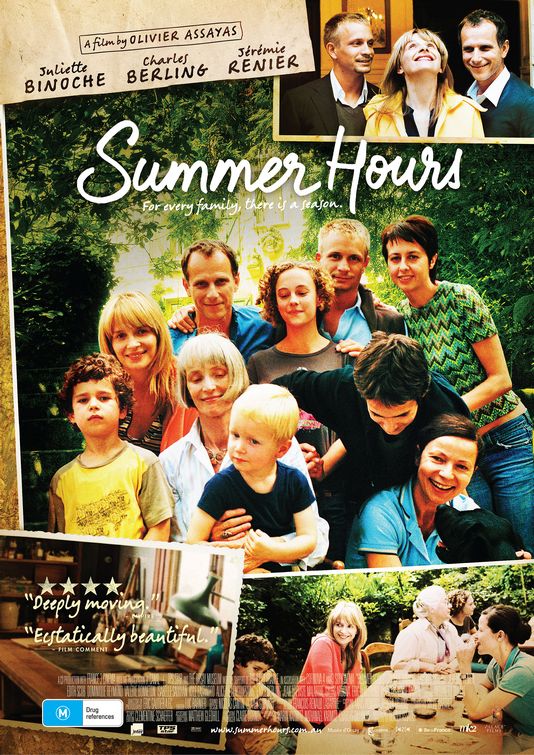
in the Air, written and directed by Olivier Assayas (the wonderful French
filmmaker of Irma Vep, Carlos and Summer Hours), he’s creating art work,
traveling all over Europe, working for his father’s television production
company, doing drugs, having intense romantic and meaningful sex with two different
women and trying to decide whether he wants to become a filmmaker. But that’s not the kicker. Oh, no.
To make matters worse, he’s an active member of the revolutionary
movement of the time (you know, running away from riot police, selling
newspapers, graffitting up his school and having to leave town for fear he
might be arrested for assaulting a guard).
And he’s not just a Communist. To
not only insert the knife in my back, but to twist it around a few times, he’s been with the movement so long, he’s
actually growing disillusioned with it.
What happened to earning enough money to hire a limo to go to prom?
I was quite
involved with Gilles and his journey.
My friend found it somewhat boring and familiar. I do have to admit, it is a bit leisurely paced
and it could use more tension at times. The
story tends to meander around without a strong focus and Gilles himself, played
by Clement Metayer with a lot of hair, is perhaps a bit too mopey and passive
without the energy of the great coming of age heroes like Jim Stark, Antoine
Doinel and Laurent Chivalier to really give the story the energy boost it could
use. So it probably won’t make it to
the top of my Assayas films. But I still
found myself often mesmerized and deeply empathetic with everything going on on
screen. It took me to a world that was
so foreign to me, I just had to find out how it was all going to turn out.
Electrick
Children is another coming of age film, but that’s where the similarity stops. The description of the movie states that the
central character, fifteen year old Rachel, is Mormon. I could be wrong, of course. I’m not an expert on comparative
religions. But by the time the movie was
over, I felt she was about as Mormon as Mother Theresa.
In one way,
I suppose that’s not writer/director Rebecca Thomas’s fault (she didn’t write
the description after all—well, I don’t think).
But what I do think is her fault is that this cult or whatever it is
that Rachel belongs to never seemed that well thought out or was that
convincing. Many people might call it
nitpicking, but when Rachel takes a story her mother told her about a red
mustang (which the mother calls a horse) and the isolated and culturally
ignorant Rachel can instantly recognize a car as a mustang (something I can’t
do, no derisive comments please) and when she and her brother use the phrase
“immaculate conception” incorrectly, a phrase that it is unlikely she would
ever have heard in her short life (whatever religion Rachel is, she sure ain’t
Catholic), then one does have to wonder whether this world Thomas has created
is a bit too haphazard and was made up as Thomas went along.
This feeling
for me was extended to the plot as well.
Rachel gets pregnant, but claims she has never had sex. This is not that unique an idea as some
people might think (Quinceanera, Agnes of God, Hail Mary, Child of Darkness,
Child of Light deal with similar ideas), but the method of impregnation is—she
listens to a rock and roll cassette tape and believes the singer of a
particular song somehow did the deed (no, I’m not making this up). Needless to say, no one believes her (though
a quick trip to the gynecologist would have immediately proven her claim) and
it causes some consternation in her small circle of religious. As a result, her parents force her into a
marriage that would never be legally recognized (and could probably get said
parents arrested on some sort of child sexual slavery charge). So she runs away along with her brother, Mr.
Will, who the family is accusing of being the father.
And the
movie quickly goes…well, not exactly haphazardly nowhere, but also not
haphazardly anywhere either. Since
Rachel has no real chance of ever finding the singer of the song on the tape, and
since she has no real plan (or even any way of forming a plan) to do so, her
journey has little choice but to become an episodic series of scenes driven by coincidence
both poetic and Candide like. She and
Mr. Will end up hanging with a group of musicians who spend their time
drinking, doing drugs and skateboarding.
In fact, Rachel has no real journey.
She just goes from place to place to place, but it’s unclear how any of
it really helps her realize anything.
The
strongest aspect of the script is, oddly enough, Mr. Will, who quickly becomes
seduced by skate boarding (a method of transportation he treats with all the
awe of King Kong meeting Fay Wray and become the most touching moments in the
film) and then by drugs and sex. His
journey is solid and makes sense. One
can follow his character arc. But
Rachel’s always felt a bit vague, as if Thomas had a great idea of getting
Rachel pregnant while a virgin, but then didn’t quite know what to do with it. Because of this, the ending is also feels a
bit off. Based on the way the story has
proceeded, the decisions made by Rachel and Mr. Will should have been filled
with irony and been the total opposite, rather than what happens here.
Everyone
works very hard in this movie and everyone takes it deathly serious (Billy Zane
in the small role of Rachel’s father even grew hair for the occasion). And Thomas shows some nice directorial
flourishes here and there. So as a
visual stylist, she definitely shows promise.
But as a writer, I’m not convinced that’s her forte.