About Me

My photo
PLEASE NOTE: I have moved my blog to http://howardcasner.wordpress.com/. Please follow the link for all my updated postings. Thank you.

Monday, December 7, 2009

WHAT’S THE MATTER WITH KIDS TODAY: Reviews of An Education and La Mission

An Education, the film based on the memoir by Lynn Barber about her growing up and being deflowered in London in the 1960’s, is like The Prime of Miss Jean Brodie, but without Brodie (or at least the romantic life force of that character, here replaced with the more down to earth Miss Stubbs—even her name says it all). Carey Mulligan plays Jenny, who, like the girls in …Brodie is being highly educated, though it’s a bit unclear why since all they are expected to do is get married. Jenny wants to experience life; her conservative father (played with incredible drollness by Alfred Molina) doesn’t understand what there is about life that is worth experiencing. Jenny meets David (played by Peter Sarsgaard with a remarkable British accent), a handsome young man who introduces her to culture and dog racing and takes her to Paris, whereupon he takes her virginity. She then finds out he’s married and with her tail between her legs, she crawls back to the girl’s school she dropped out of and begs to be let back in (though it’s a little unclear how she did it). There is something a little off here. Theoretically, she’s supposed to have learned her lesson, but it’s unclear what that lesson is: not experience life because it might break your heart? Jenny is right in that what she learned through David is every bit as educational as what she was being taught in school (actually, more so). It’s not her fault he was married; if he wasn’t and she had gone off with him and lived happily ever after, traveling the world, going to concerts and museums, collecting art, would the lesson be to drop out of school and experience life? But no matter. This is still a wonderful film with an incredibly witty and sharp script by Nick (About a Boy) Hornby. Mulligan is pitch perfect as Jenny, a joy to behold. The whole movie, in fact, is a joy to behold.


La Mission is a very sincere, very earnest film, one of those movies described as having its heart in the right place. Benjamin Bratt plays Che Rivera, a very macho Hispanic with very conservative macho values living in a very macho section of San Francisco. He’s very macho, an ex-convict, now covered with tattoos and working on cars he takes low riding once a week. Che’s life starts to fall apart when he finds out Jesse, his straight A son, is gay. They have fisticuffs and Che throws him out of the house. Slowly, the two find their way back to each other, but not until Jesse is shot by some gang bangers, Che threatens Jesse’s lover and Jesse leaves for Los Angeles to go to college. There’s nothing wrong with the movie. As I said, it’s very sincere, as sincere as Che is macho. And though the story takes place within a subset of America, its theme is universal. Of course, that’s also one of the problems. It’s so universal, it’s basically no different than the hundreds of other films that have come before it with the same topic and structured according to the same formula. The background may be different, but everything else is incredibly familiar. The structure is also a bit lopsided. So much of the story is devoted to Che, that Jesse’s story gets lost here and there and doesn’t seem to exist on its own but only to reveal Che’s character. There’s one scene that has potential, but doesn’t go there. When Che comes looking for Jesse who left the hospital after Che threatened Jesse’s lover (a very white and non-Hisptanic lover), Jesse goes to stay with his lover in the very upper middle class house of the lover’s very white parents. Che arrives and sees two Hispanic workers taking care of the garden. Visually this has tons to say, none of which the script (by the director Peter Bratt) explores. There is actually something a little uncomfortable in the author saying that upper middle class whites would have no problem with their son’s gay lover coming from a working class Hispanic background, but Bratt’s character can’t even accept his son being gay. In the end, the strongest aspect of the movie is the director’s success at creating the milieu of the characters. But the movie Quinceanera is more successful covering some of the some themes and ideas.

Sunday, December 6, 2009

LOVE DOWN ARGENTINE WAY: Reviews of Love in Transit and Music On Hold

I went to the Argentine film festival here a few weeks ago and saw two movies (unfortunately, one of them wasn’t the Argentine entry in the foreign film Oscar category because that one was sold out—I knew I should have bought my ticket a week earlier). However, the two I saw passed the time well enough. Both are love stories, one a comedy, one more of a dramedy.


Love in Transit is two stories about two sets of lovers. The two stories are dramatized at the same time, though the characters don’t interact between the two plotlines. A Spaniard comes to Buenos Aires because his girlfriend who went to visit never came back (don’t you hate when that happens). At the airport, he meets an waitress because she looks like his girlfriend from the back, but she isn’t. When he gets to his girlfriend’s apartment, he finds out she has apparently left the country (don’t you really hate when that happens). He then meets the waitress and they start an affair. Meanwhile, a writer meets a woman at a party and they start an affair. When she suddenly decides to leave the country, he follows her. Up to about half way through, this is a not uninteresting, but not particularly exciting and fairly run of the mill love story (screenplay by Roberto Montini and director Lucas Blanco). Then one realizes that in actuality, both stories, though happening at the same time on screen, in real time are not. The waitress is the writer’s girlfriend and the woman the writer follows after is the Spaniard’s girlfriend he came to town to see. The writer/girlfriend story takes place before the Spaniard/waitress one and the two sets of lovers just barely miss each other at the airport. Suddenly the story becomes far more interesting and more exciting and the structure creates a sort of poignancy that wasn’t there before. In the end, though entertaining enough, it is more clever than anything else. But it does work the tear ducts a bit.


Music On Hold is what is called a meet cute love story, but it’s doubtful that a couple has ever met more cute than they do here. Stay with me on this one. A composer of music for films is having trouble coming up with a tune and may lose his latest gig if he doesn’t. He calls his bank about an appointment regarding his mortgage and is passed from hold to hold, hearing a different musical composition each time until he hears some music that gives him the perfect tune for the film. Then the phone is answered by a bank executive. The bank executive is a nine month pregnant woman whose boyfriend fled the country when she got with child. She has told her mother (played by the wonderful Norma Alleandro) that the boyfriend is still with her. The mother lives in Spain, so no problem, until she suddenly shows up in town. The composer, who has forgotten how his tune goes, comes by and gets the executive to let him use her phone to run down tunes—just as the mother arrives. So of course the executive says that the musician is her boyfriend and the musician goes along with it in trade for the executive’s help in tracking down the tune. Hilarity and a happy ending ensue. Did you get all that? It sounds ridiculous and a bit too much, which may be why it’s so enjoyable; it’s so unapologetically and energetically manipulative. The screenplay by Julieta Steinberg and Patrico Vega is entertaining and moves at a good pace. There are times when it goes perhaps a bit too far (one section where the computer system with the hold music is taken in for repair and the musician and executive break in to get to it seems a bit too much) and the subplot where the executive’s gynecologist is also the musician’s ex-wife isn’t milked for all the laughs it could be. But in the end, this was a perfectly acceptable evening in the theater and seems ready made for an American remake (Hugh Grant/Julia Roberts anyone?).

Saturday, December 5, 2009

FIVE GREATEST FEMALE PERFORMANCES IN FILM (LEAD)

Greta Garbo in Camille

Katherine Hepburn in
Long Day's Journey into
Night


Maggie Smith in
The Prime of Miss Jean
Brodie

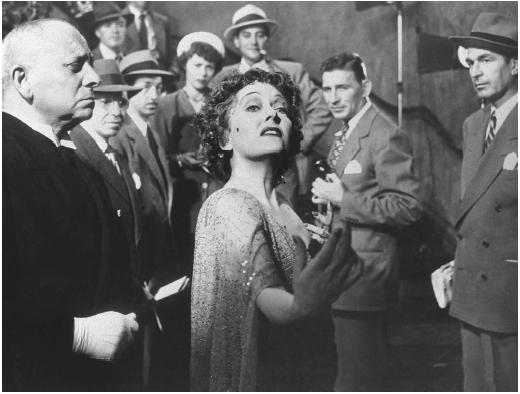
Gloria Swanson in
Sunset Boulevard


Bette Davis in
All Bout Eve

CALL OF THE WILDS: Reviews of Where the Wild Things Are and The Fantastic Mr. Fox

Where the Wild Things Are had to grow on me. It wasn’t until about halfway through that I finally figured out what it was about: a character study of a young boy with a classic case of serotonin deprived depression. Max Records plays Max (well, wasn’t that convenient), a young boy with wild mood swings of grandiose highs and debilitating lows, all out of proportion to the circumstances surrounding him, though those circumstances (he’s new to a neighborhood; no friend; child of divorce; a sister too much older than him to find him nothing but an annoyance; his mother has a new boyfriend) do add to his problematic situation. His mother, played excellently as usual by Catherine Keener, doesn’t really understand what’s going on nor has the time to figure it out. After a particularly egregious tantrum, Max runs away, finds a boat and sails to an island of gigantic and somewhat weird puppet/animal like creatures, strongly voiced by such actors as James Gandolfini, Catherine O’Hara and Forest Whitaker. The film began working for me when I realized that these creatures all had similar, though even deeper and more irrational, emotional problems than Max. For the first time, Max gets to see himself as other people see him. He returns home, but it’s unclear whether this adventure has really helped him. The creatures are wonderfully animated, especially the mouths, and the music and songs are heaps of fun. The main drawback may be Spike Jonze (who co-wrote the screenplay with Dave Eggers) who directs the piece as if he were Paul Greenglass doing a Bourne film. I found myself at times trying to fill in the blanks because Jonze had a yen for using jump cuts. But by the time it was all over, I was moved.

The Fantastic Mr. Fox is well…fabulous (bet you thought I was going to say “fantastic”, didn’t you; please, it would be so obvious to include that word in this review). It’s as clever and fun and quirky as Babe, which is saying quite a bit. There is one rather odd aspect to it. Fox and his friends are animals who can walk, talk, reason, etc., basically humans in animal bodies. But they feed on other animals, like chickens, geese, turkeys, etc. This is rather creepy and almost comes across as cannibalism; it’s actually borderline disturbing. Of course, if one realizes that the original story is by Roald Dahl, whose stories always did have a unique and somewhat creepy aspect to them, I suppose it shouldn’t be very surprising that this isn’t your typical everyday children’s film. The suave and debonair Fox is played by the suave and debonair George Clooney. He’s actually a character I would have little to do with in real life since he’s so incredibly vain and egocentric, running roughshod over everybody else, doing whatever he wants to do when he wants to do it and if anybody else has a problem with that, too bad (he’s also pretty rotten to his son). However, that is one of the great things about art—one can spend quality time with someone one would never have anything to do with in real life from the safety of a movie seat. His longer suffering wife is played by Meryl Streep (that makes three films in one year for both of them--aren't they the busy little bees) with an appropriately long suffering voice. The screenplay (by director Wes Anderson and the tres droll Noah—Squid and the Whale—Baumbach) is witty, energetic and never runs out of cleverness. The direction by Wes Anderson is ever so much the same; no scene is complete with some extra bit of visual manipulation that just gives it that something…well, extra, to make it memorable. The animation is remarkable, down to the moving hairs on the characters' face. It’s what is called sophisticated and adult; the question then is whether it will sell in the multiplex. One can only hope.

Monday, November 30, 2009

filM noIrSERY LOVES COMPANY: Reviews of Bad Lieutenant: Port of Call, New Orleans, The Boondock Saints II: All Saints Day and The Missing Person

The Boondock Saints II: All Saints Day is the ultimate revenge fantasy. No, not the story in the movie, but the movie itself. After having been used badly by Harvey Weinstein (to put it mildly and so the rumors go), Troy Duffy (the writer/ director of both Boondock Saints films) basically told Harvey to go fuck himself. Out of the ashes that he found himself in, Troy, the phoenix, managed to make a film (the first Saints) that became a cult favorite and has now managed to write the sequel. Which means that he has basically told Harvey to go fuck himself twice and gotten away with it (or so the rumors go). I can’t say that The Boondock Saints I or II is my cup of tea, but I found a certain fascination in watching both of them. The writing is clever in both, but perhaps even more so in the sequel. There are some wonderful set pieces where Julie Benz, playing an FBI agent, reconstructs events leading up to the crime scene. And overall, there is something exciting about Duffy’s approach to storytelling structure. But for me, from a directing standpoint, everything was a bit too much, from the accents to the acting to the way everything was directed in a very frenetic, in your face manner. It’s as if Duffy was trying to out Tarrentino Tarrentino, which he might have a chance in doing as a writer, but so far, doesn’t show any real signs of being able to do it as a director. There is also something intriguuing about Duffy’s moral theology by way of the Catholic church (it’s certainly brave of him; very few writers, at least in the U.S., would be so open about it). At the same time, there’s something deeply disturbing about the dénouement where the Catholic Church is set up as the ultimate arbiter of good and evil, a sort of modern day Inquisition (and we all know how well that went over the last time that happened). What might be really interesting is getting get Duffy and Dan Brown in the same room and letting them duke it out; what a match that might be.


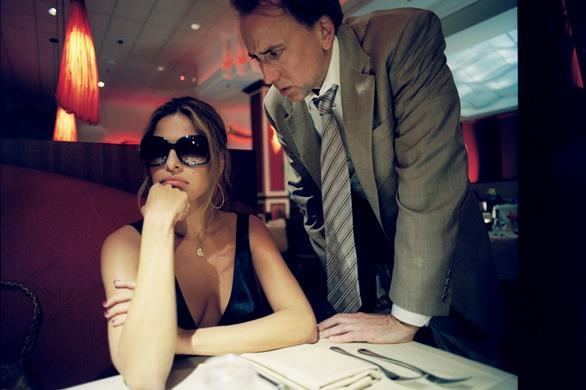
As surrealistic as Boondocks II, but much more level headed in approach to directing (if such a thing can be believed), is Bad Lieutenant: Port of Call, New Orleans. I call it whack. Whatever else it may be, this film by director Werner Herzog and the screenwriter William Finkelstein is definitely whack. Nicholas Cage plays a New Orleans police detective who rescues a criminal during Katrina and injures his back, causing him to become a drug addict. And whatever else you can say about Cage, he goes there, he really goes there. Wearing one shoulder higher than the other as if he were playing Richard III, eyes growing increasingly darker and skin constantly paler, he eventually begins to resemble Klaus Kinski in Herzog’s version of Nosferatu. Cage doesn’t just stop at nothing to play this character, his character also stops at nothing to solve a homicide of a family that got caught up in a drug war. There are three basic plots going on here: the homicide; Cage’s problems with drug addiction and a gambling debt; and his relationships with his recovering alcoholic father, his step-mother (who only drinks beer, so isn’t an alcoholic) and his drug addicted prostitute girlfriend. Though I lost some of the plot strands here and there on the homicide investigation, all the stories had me on the edge of my seat. And while Finkelstein’s film noir plot, full of fun and clever twists and turns, goes on its gleeful way, Herzog throws it all into a somewhat surrealistic pot and stirs frantically; somehow the two styles not just work together, they complement each other. It has been well cast, not just in the leads, but in the smaller roles where such people as Val Kilmer, Brad Dourif, Michael Shannon, Shawn Hatosy (what a great face), and Jennifer Coolidge (in probably her greatest performance, playing against type as Cage’s step mother) show up (an excellent primer on how to cast supporting roles, in fact). The city is overcast and depressing, even when it’s sunny, and it’s filled with alligators and iguanas even when they aren’t really there (you have to see the movie). There is no real moral to the story, except perhaps that life does not come equipped with morals. In fact, every time you think Finkelstein is going to wrap things up in a typical Hollywood character arc way, he sabotages it and takes you down a different path. Is the movie any good? I don’t know. All I know is that I don’t care, that I had a great time and that it is definitely whack.


The Missing Person is more a throwback to the olden days of film noir, with a boozing, alcoholic PI caught up in a web of intrigue with lots of twist and turns. The mood is the strongest aspect of this film and it alone almost holds your interest in and of itself (most of the scenes take place at night or in dark, shadowy rooms—the cinematography is from the Gordon Willis school of The Godfather—and even the daylight scenes seem a bit dark even when it isn’t). But the story never quite holds together. Michael Shannon plays the PI, a self-destructive wino with a tragic past (and it is tragic, the revelation revolving around 9/11 is very moving). He is hired through a friend to trail someone on a train from New York to L.A., but is not told the whole story (are private eyes ever told the whole story). He ends up being used as all self-destructive, boozing PI’s with a tragic past are. Shannon’s character is a puzzlement. At times he’s rather brilliant at what he does. At other times, he seems like the biggest idiot in the business, but more at the convenience of the writer (Noah Buschel, who also directed) than because this dichotomy is an organic part of his personality. Much of the story doesn’t make a lot of sense; people don’t always act as logically as they should; and the ending is more head scratching than satisfying. But there is something oddly intriguing about it at the same time.

Wednesday, November 25, 2009

A SERIOUS MAN AND AN EVEN MORE SERIOUS MAN: Reviews of A Serious Man and Collapse

In the Old Testament he was called Job. In Joel and Ethan Coen’s new movie, he’s called Larry Gopnik (played with an expertly sad hilarity by Michael Stuhlbarg). Gopnik’s travails are not quite as travailic as Job’s (Job’s kids die, as do his servants; he loses his land; he loses his wife; he ends up covered in boils; and his friends torment him when they try to help him). Gopnik’s problems are more common to the common Joe (or common Job): his wife wants a divorce; his kids pay more attention to the TV than to him (except when they want the TV antenna fiddled with); his brother won’t move out; he might not get tenure. And if not a righteous man like Job, Gopnik is a good enough one, a serious one. So when these bad things pile up, it doesn’t seem any more right on God’s part than what happened to Job. The screenplay is funny and biting with a wonderful prologue about a possible dybbuk visiting a Russian shtetl in the old country. It’s the sort of existential scream type of screenplay that I love: what is the meaning to life if God acts in a meaningless way? And in the same way that Job is visited by three friends, Gopnik seeks out the help of three rabbis, none of whom can give him the answer he needs (keep a look out for Simon Helbert who plays Wolowitz on The Big Bang Theory). The main issue I have is the ending, which I found a bit puzzling. In the Bible, God visits Job in a whirlwind and reads him the riot act, telling him that since God created the heavens, earth and even Job himself, Job has no right to challenge God about anything. Job accepts this and afterwards is rewarded with health; his wife back; twice as many kids; twice as many servants; and twice as much wealth. But the Coen brothers end their film just as the whirlwind approaches and just as Gopnik gets his boils (here, it’s lung cancer). Because of this, the Coen brother’s film has an even darker message than Job. In the Bible life is sort of a meaningless back and forth between good and bad fortune; for the Coen brothers, it’s just one plain sick joke with a punchline that’s suppose to be funny because it isn’t. For the Coen brothers, unlike the writer of Job, when life gets bad, it just gets worse.


The movie Collapse is one long interview with Michael Ruppert, who is described as a conspiracy nut, though in this film he talks about very few conspiracies. That’s actually what makes Ruppert so scary; he doesn’t blame the state of the world on a secret cabal of people who are driving our world into the ground—that would be too easy. He blames it on a whole host of issues that have gotten away from mankind as a whole. It’s one thing to solve our problems by getting rid of a group of people; it’s another thing to change the whole paradigm of mankind. Ruppert is more a doomsday prophet than a conspiracy theorist and it’s hard to argue with any of his theories; one can certainly disagree with bits of them here and there, but all in all, the future doesn’t bode well for mankind. His main theory revolves around the idea of peek oil—that we’ve reached the most oil possible and that now it’s only a matter of less and less until we run out of it, and since everything (plastics, agriculture, energy) depends on it, what is going to happen when we have no more? It’s a fascinating movie. One can’t look away, sort of like watching a slow train wreck, which is a somewhat apt metaphor here. It’s by Chris Smith, the same person who did American Movie, about another obsessed person, though that someone was intent on finishing a B horror movie. Perhaps Roland Emmerich should take note; no matter how scary 2012 is with all its special effects; it’s hard to believe it could possibly be any scarier than this one person.